

Flexible Connection Agreements (FCA) in Germany: What Battery Developers Need to Know

Germany’s Grid Bottleneck: Why 700+ Battery Projects Are Waiting
Germany’s grid is currently stuck in a major bottleneck, with over 700 battery projects waiting to connect. To fix this, developers are being offered a 'Flexible Connection Agreement’, or FCA. Think of an FCA as a 'fast pass' to get your battery project onto the power grid - providing you accept certain conditions. In this blog, we’ll explore Flexible Connection Agreements in Germany, and how you can approach modelling these in your energy projects.
You can also watch my full video on this topic below:
From “First Come” to “First Ready”: Changes to Germany’s Grid Queue Rules
Once projects reach the front of the queue, which from April will be on a “first ready, first served basis” rather than a “first come first served” basis, they need to negotiate grid connection terms. They often face a choice: wait longer for firm capacity, or accept an FCA, as a condition for receiving a connection offer. FCAs are contracts which allow grid operators to curtail a project’s import or export capacity in real time depending on factors such as local grid congestion, network loading, or system stability requirements.
FCAs in Germany: Law, Curtailment & Benefits
With paragraph 8a of the Renewable Energy Act and paragraph 17 2b of the Energy Industry Act, FCAs are now anchored in law and allow network operators to contractually enforce static or dynamic limits on maximum import and export capacity during periods of grid congestion.
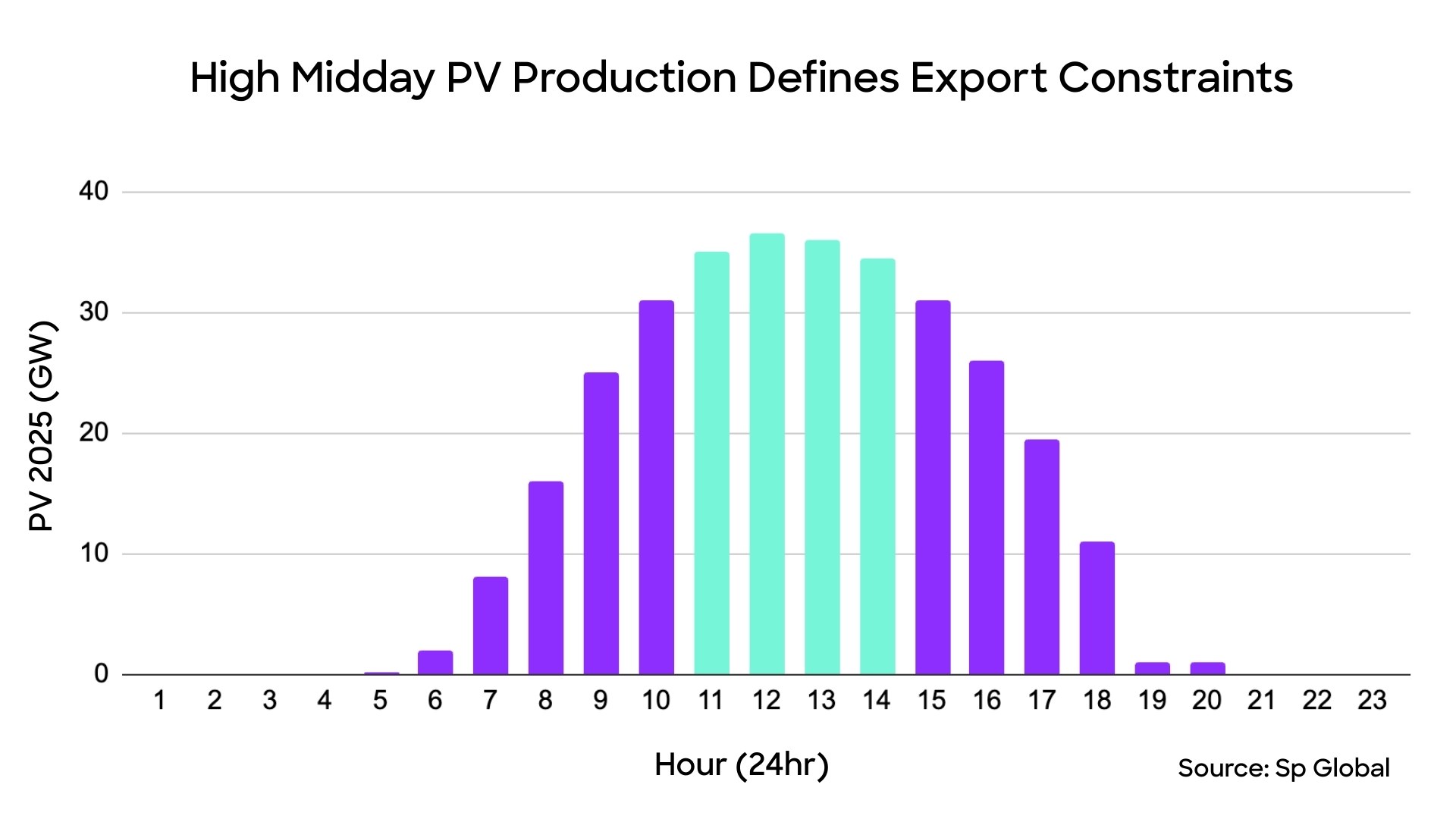
These limits are typically designed around local congestion patterns, for example, reduced charging capability during midday PV peaks or reduced discharging capability during high-load hours. For battery projects, this directly impacts revenue stacking and dispatch optimisation.
.jpg)
Sometimes other constraints such as notice time can be introduced, meaning that asset owners and operators are informed of constraints closer to real-time which makes them harder to optimise.
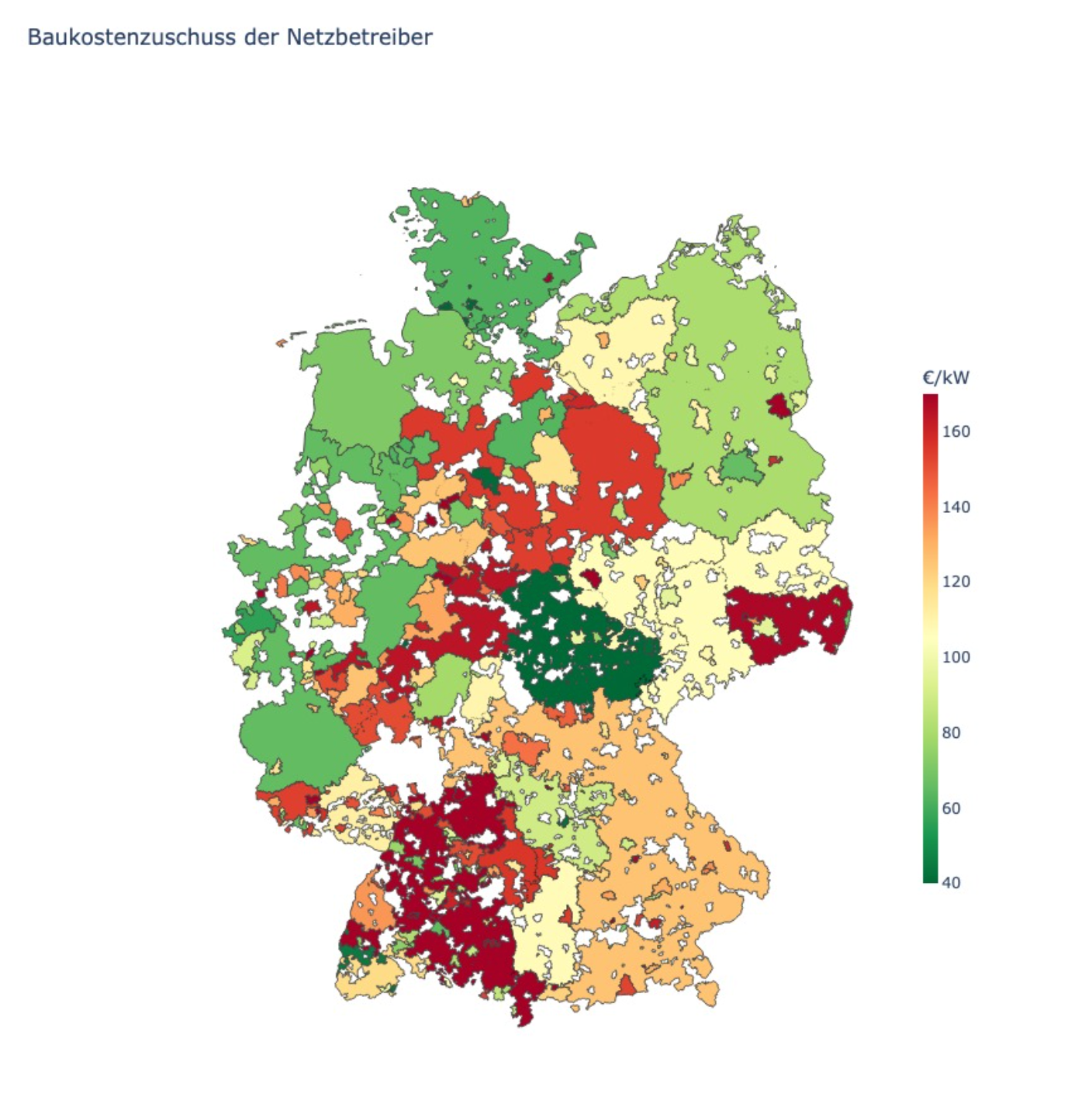
In return, FCAs can enable earlier grid access and potentially reduce the Baukostenzuschuss. The Baukostenzuschuss is a one-off payment to the grid operator to contribute to grid expansion costs.
How to Model Flexible Connection Agreements in Gridcog
We’ve built a project in Gridcog using an example co-located solar and battery project, showing how you can model your specific FCA setup.
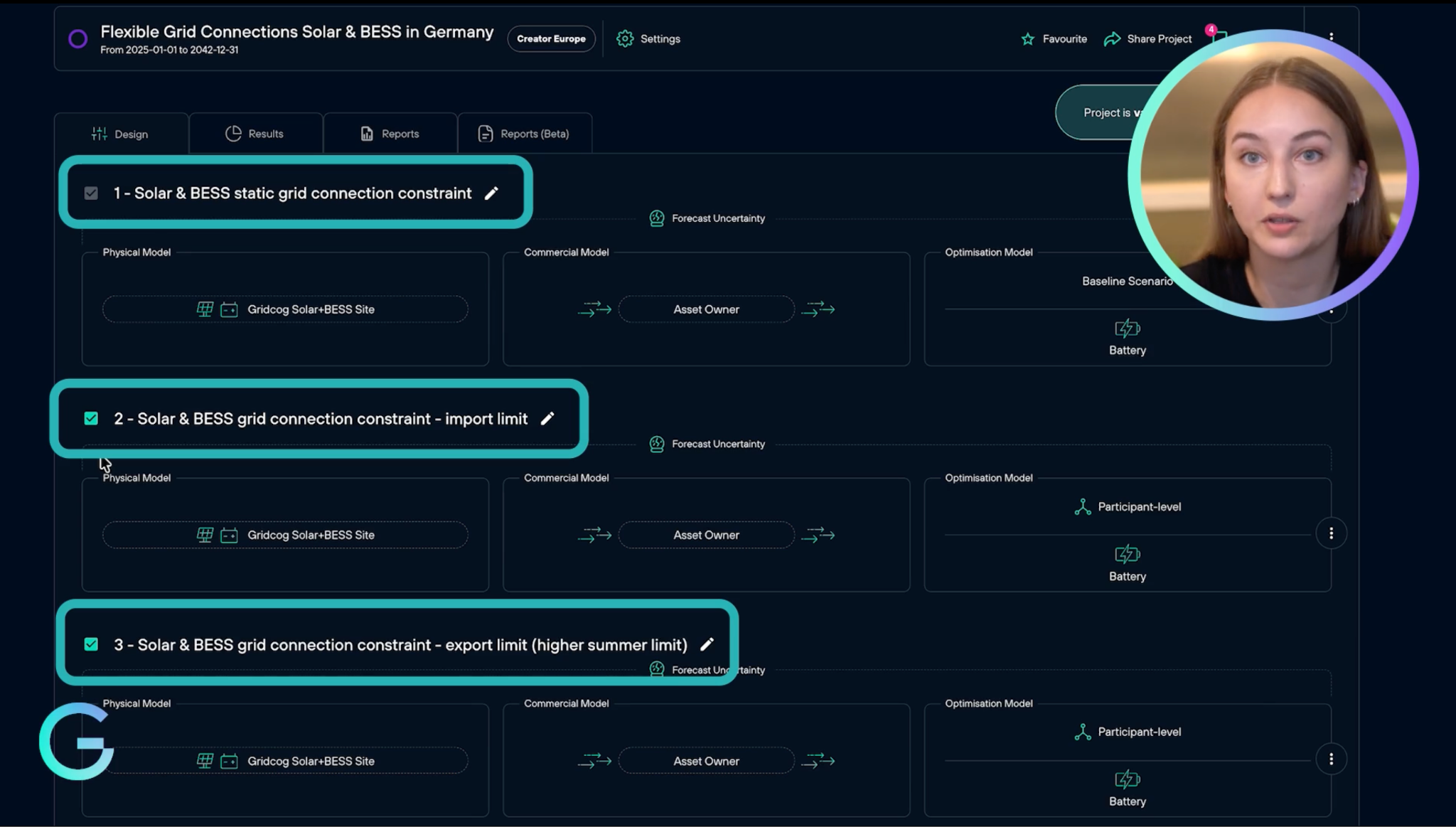
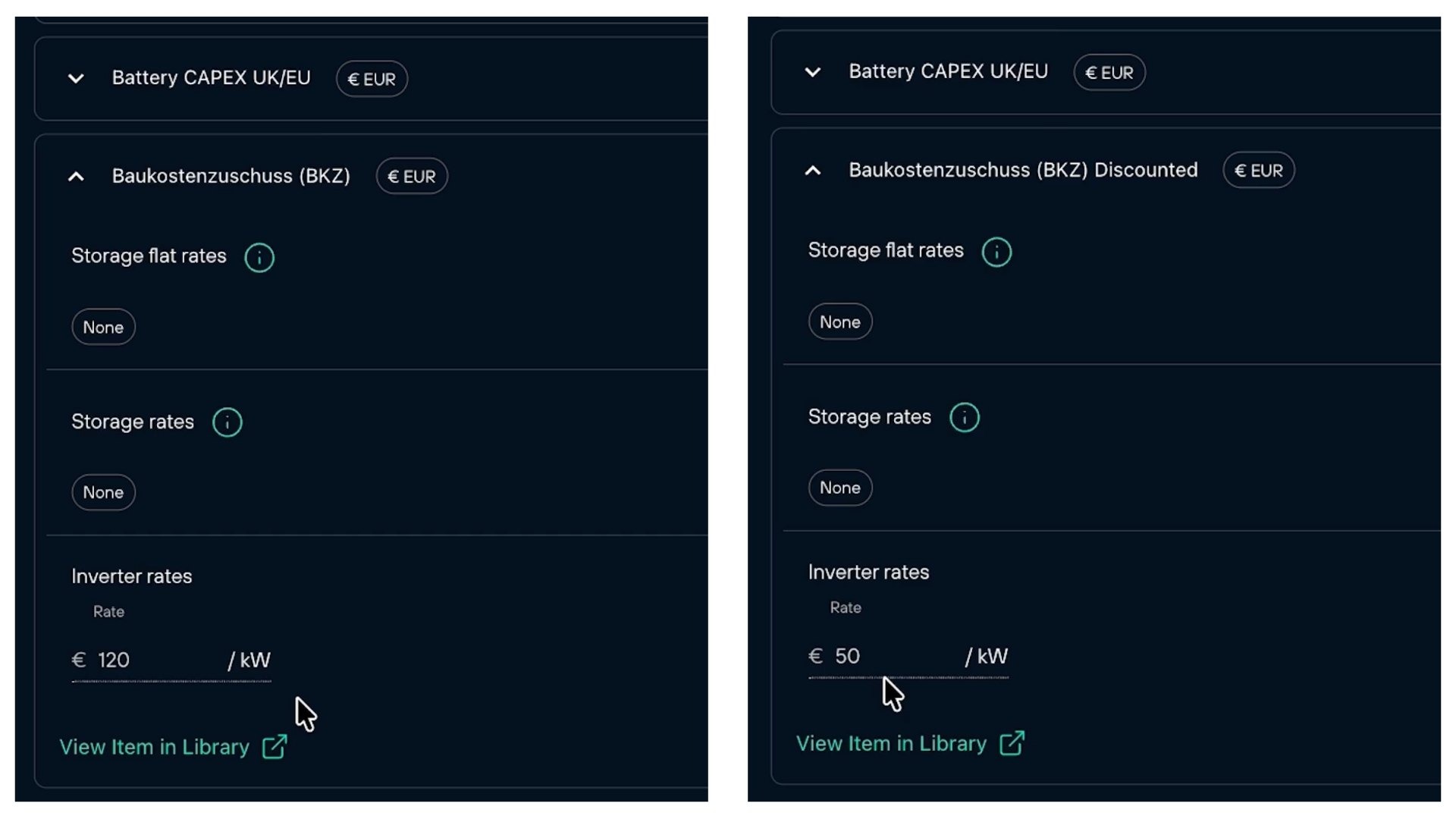
In the base case, we assume a static grid connection. In scenarios two and three, we implement import and export-side constraints. In the base case, I have also included a separate Baukostenzuschuss charge. In the scenarios with an FCA, the Baukostenzuschuss is discounted. You can specify your own CAPEX item here, including any scaling factors or asset-size dependencies.
Now let’s look at how we specify the grid connection limits. Here, I define the import constraint as a share of the grid connection capacity, with a reduced percentage during high-load hours. This reflects periods when the grid is more congested and additional imports are more restricted.
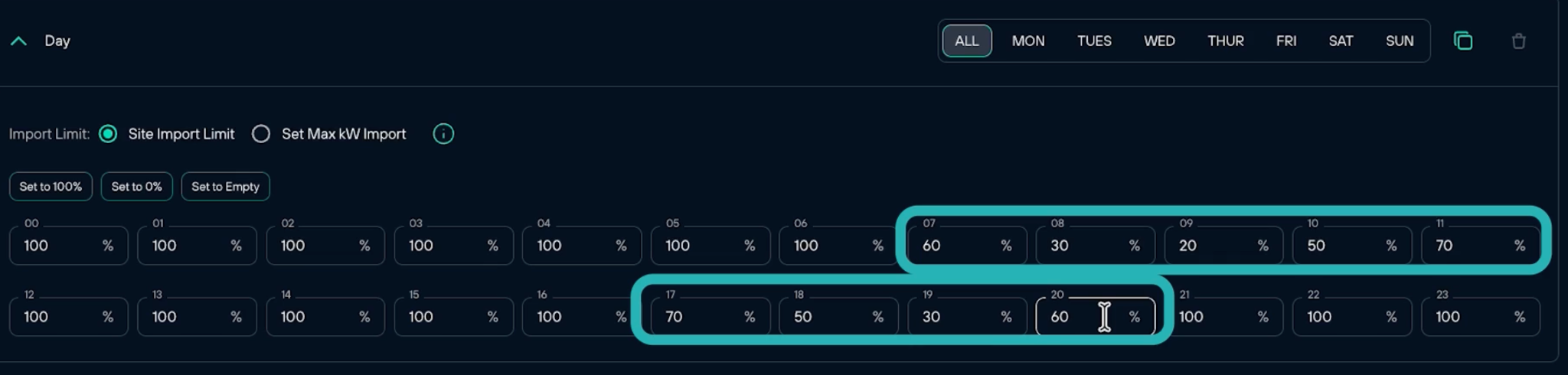
For the export connection limit, I have defined separate schedules for summer and for the rest of the year. During hours with high solar production, export is constrained by up to 90% in summer and by up to 80% during the rest of the year. Clients can also add granular data to reflect event-based constraints.
Financial Impact: How FCA Constraints Change Project Cashflows
Looking at the results, we can see that in this setup the grid export constraint has a larger impact on revenues.
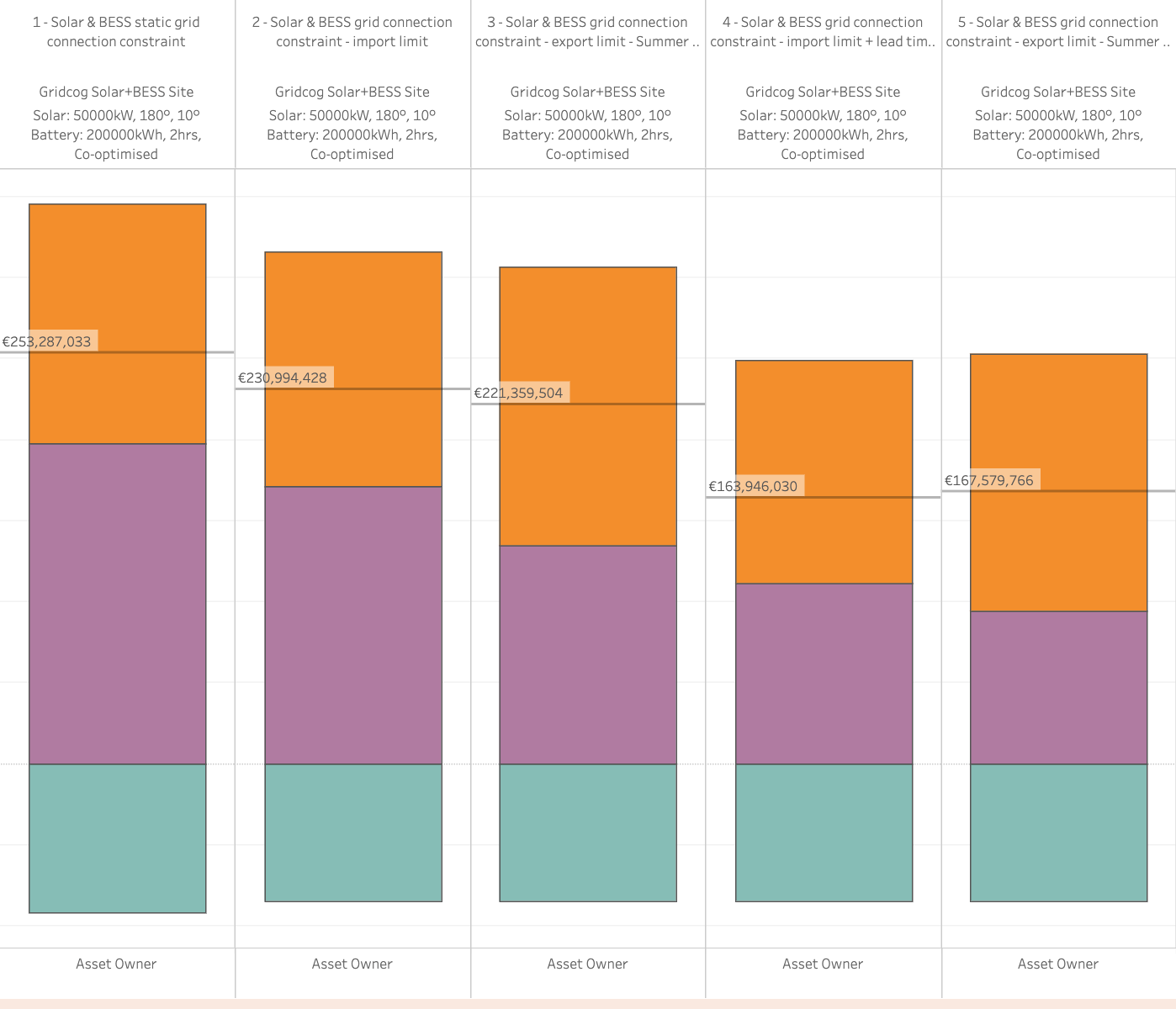
This is because in the base case, the solar plant exports to the grid, whereas in the export-limited case this isn’t possible around midday.
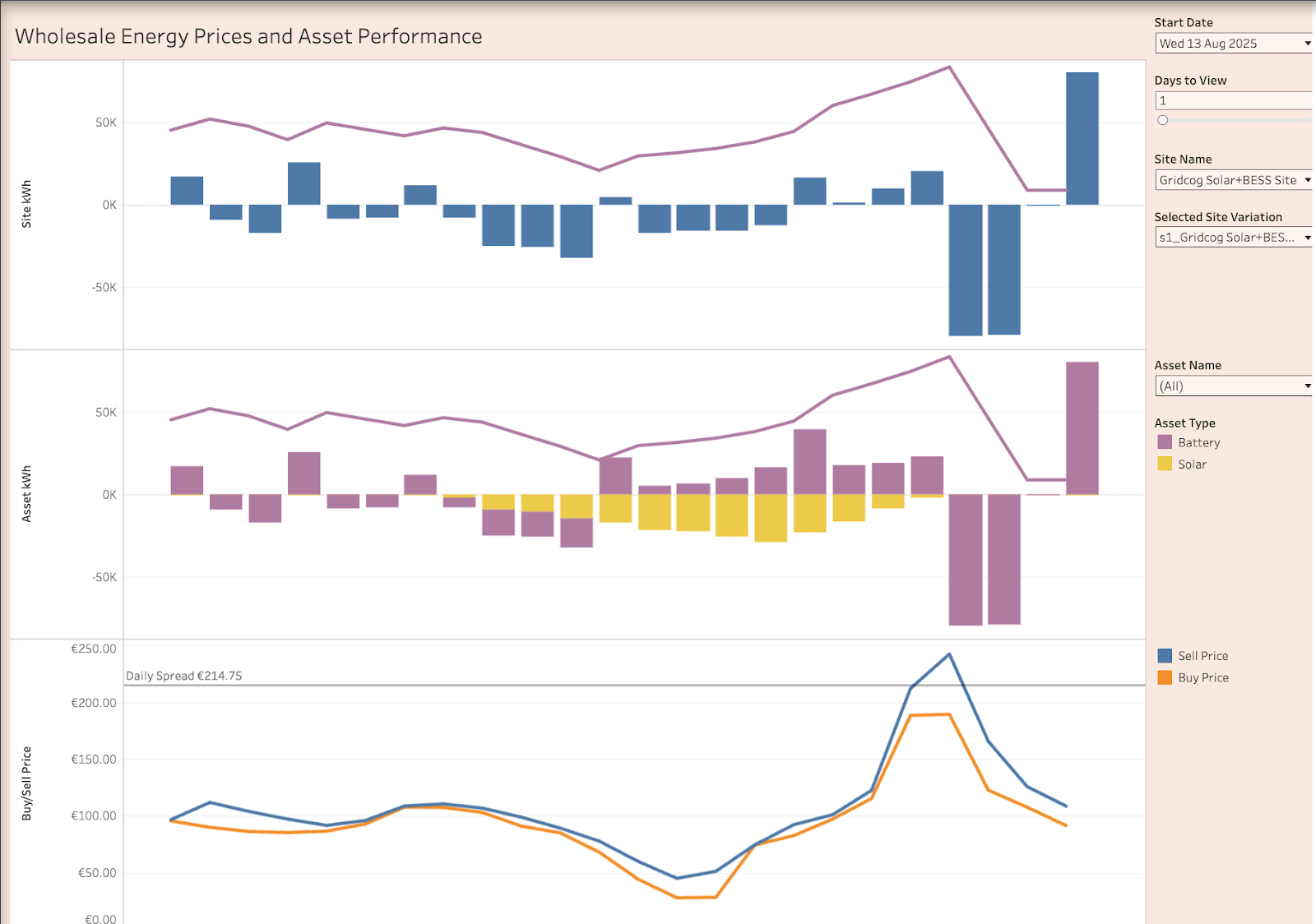
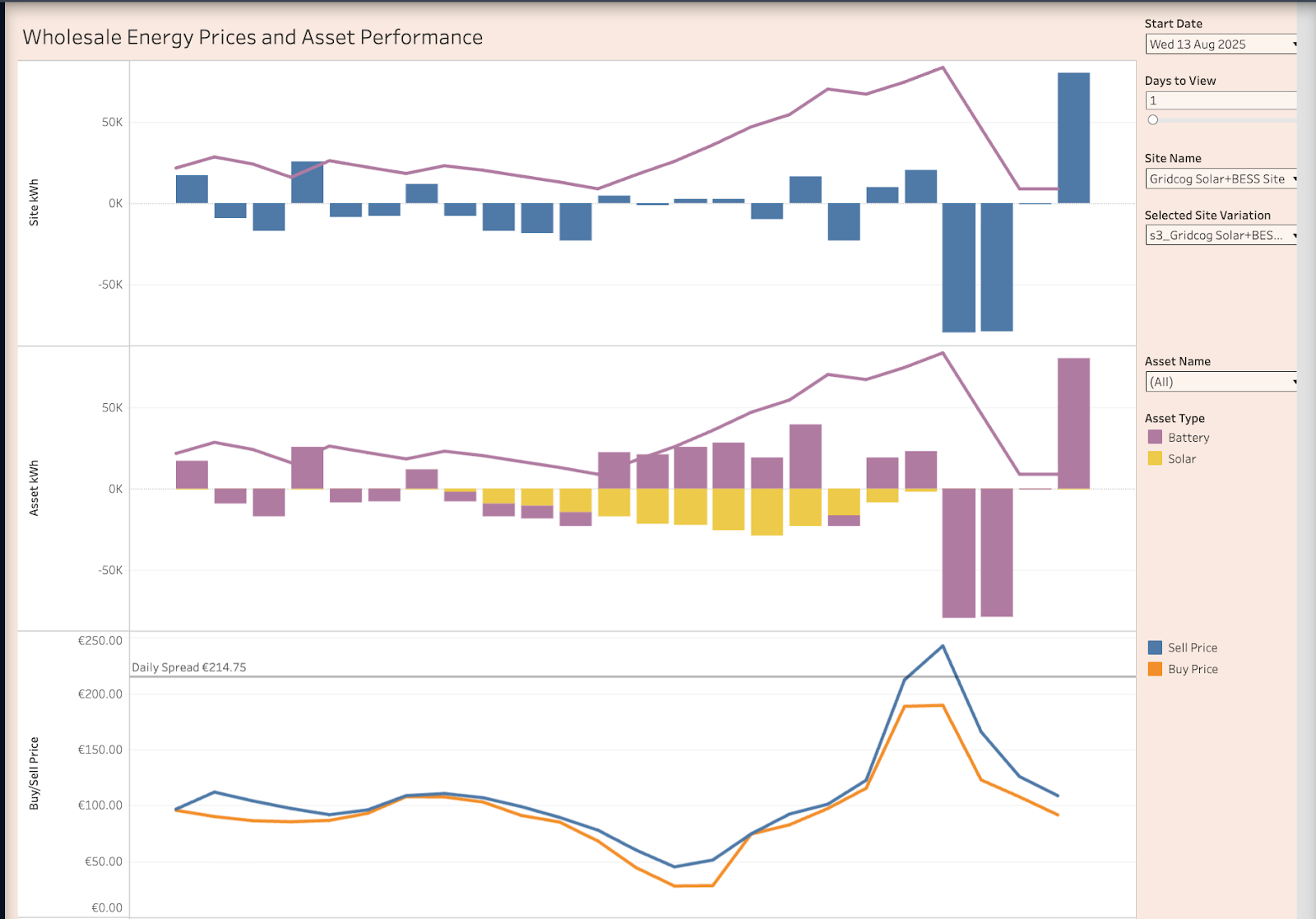
As a result, the battery compensates by charging more to absorb the surplus solar generation that would otherwise be curtailed.
Navigating Increasing Complexity in Energy Project Development
Energy project development is becoming increasingly complex as the energy system transitions, with new commercial structures emerging and additional operational constraints coming into play.
If you would like to use Gridcog to model your own FCA options, whether you are currently negotiating them or have already received an agreement, reach out to the Gridcog team.


