How market dynamics are reshaping standalone solar
.jpg)
Rooftop solar cannibalisation, grid congestion, curtailment, and negative pricing are more than just buzzwords. They are shaping the future of standalone solar projects. These market dynamics have increasingly challenged the economics of renewable energy generation, making it harder for standalone solar farms to remain financially viable.
But how significant is the impact, and what strategies can solar asset owners use to protect value?
The Rise of Negative Pricing in Victoria
To understand the scale of the issue, we examined historical wholesale electricity prices in Victoria, Australia. So far this year, Victoria has recorded nearly 1,500 hours of negative pricing, approximately four times higher than five years ago. To put that in perspective, that is equivalent to two full months where wholesale electricity prices fell below zero.
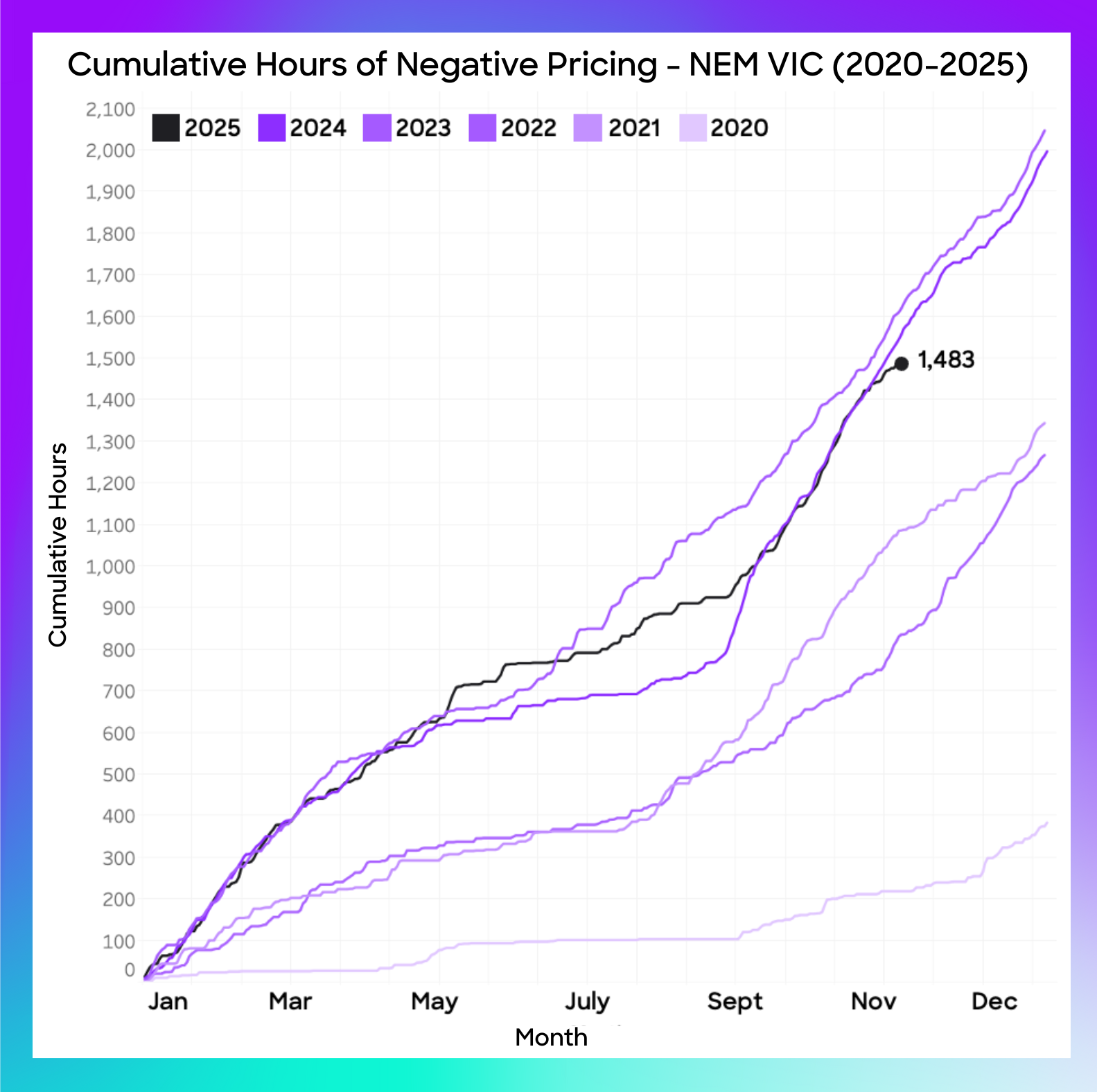
The timing of these negative prices is critical. They often occur during periods of peak solar generation, directly affecting the revenue potential of standalone solar farms.
Negative Prices Hit When Solar Generation Peaks
The chart below illustrates the daily average generation for a 110 MWp solar farm in North-Western Victoria.
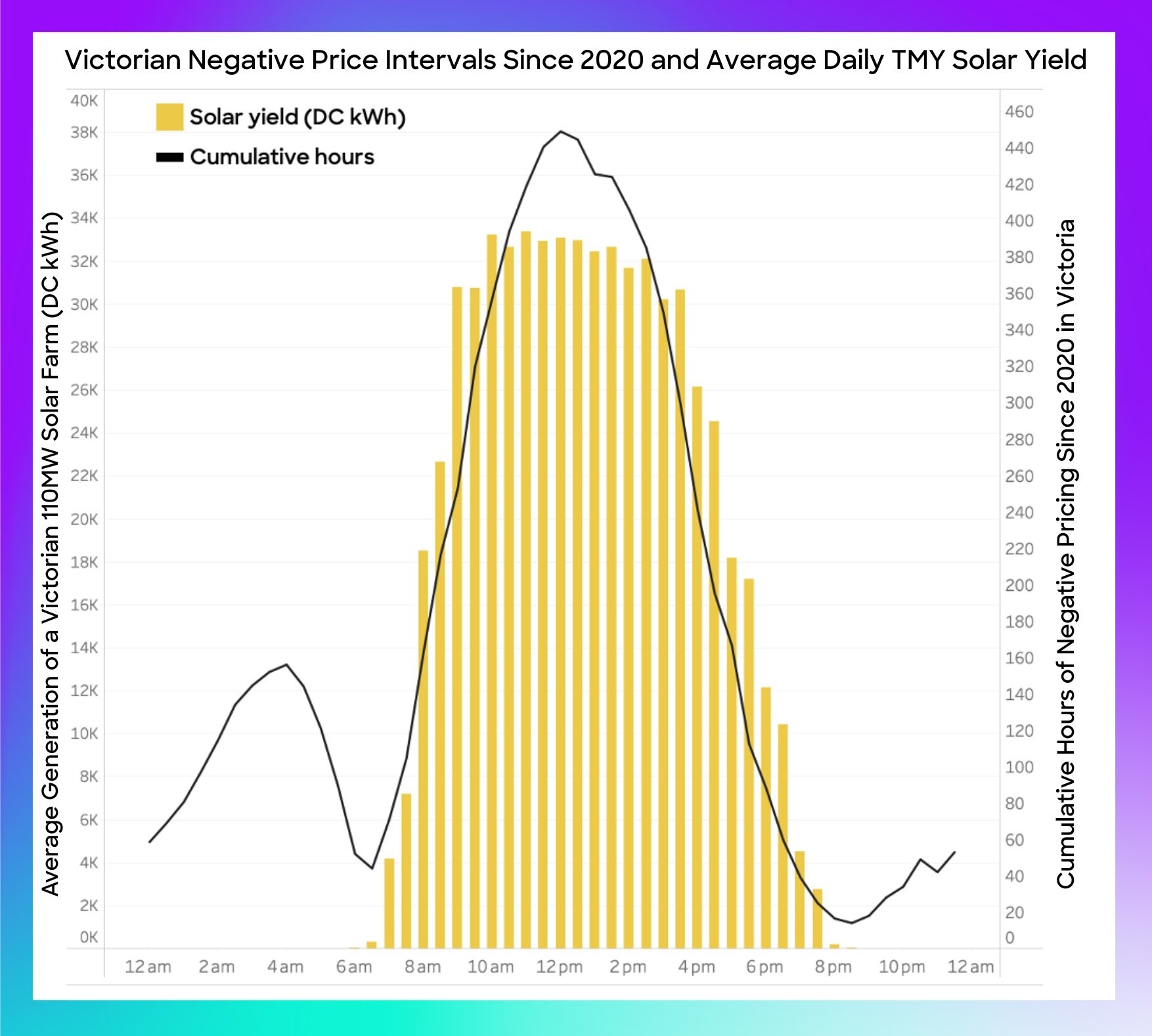
When overlaid with historical negative pricing intervals, a clear trend emerges. Negative pricing coincides with peak solar output, meaning prices are at their worst when solar generation is at its best. This results in a direct hit to project revenues.
How Storage Can Improve Solar Economics
To explore the potential of storage, we modelled a 20-year, merchant-exposed project in Victoria under two scenarios:
- 110 MWdc solar farm in North-Western Victoria
- The same project with a 50 MW / 4-hour battery energy storage system (BESS)
The model used consistent assumptions:
- Merchant project using the past 12 months of Victorian wholesale electricity pricing
- Imperfect foresight
- GenCost CAPEX rates for solar and BESS
- Grid import/export limit of 50 MW / 90 MW
- LGCs until the end of 2030
Standalone Solar vs Solar with Storage
Over the 20-year period, the standalone solar project ends up roughly $13 million in the red, while the co-located solar and storage project delivers around $42 million in profit, even after accounting for an extra $100 million in hardware costs.
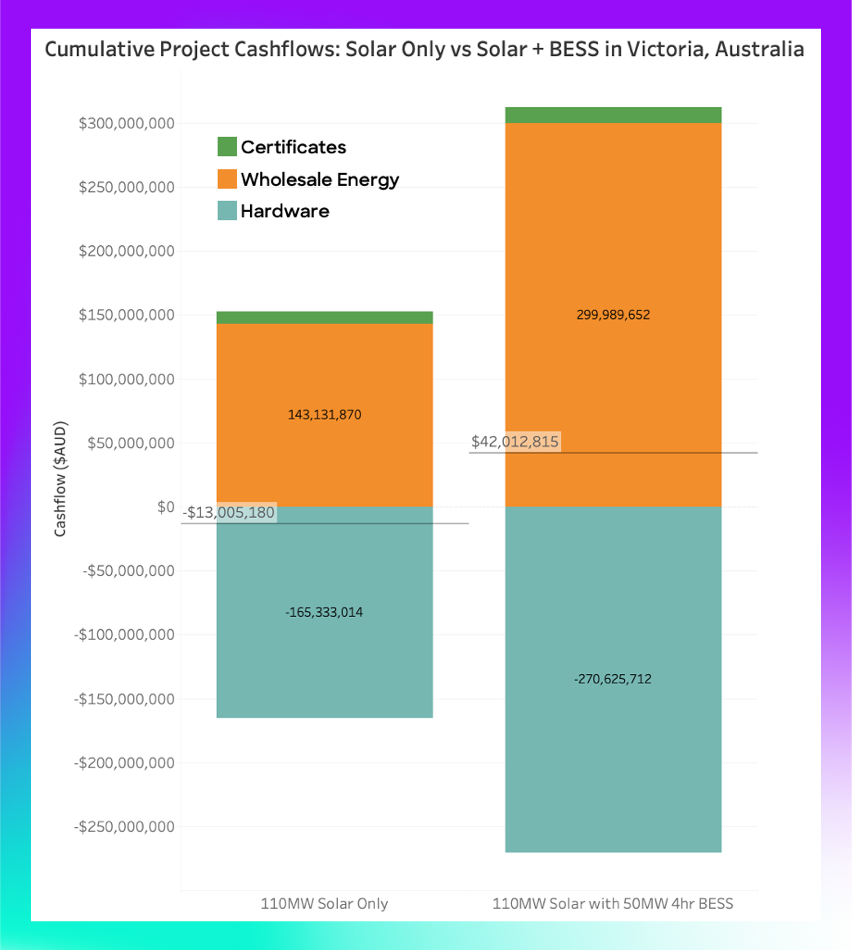
The difference is driven primarily by the battery’s ability to optimise energy export, as well as merchant arbitrage revenues captured from excess solar and discharging when prices recover.
The Future of Standalone Solar
Even without considering MLF impacts, ancillary service revenues, grid congestion effects, or contracted revenue streams, the trend is clear. The economics of standalone solar generation are shifting rapidly. In many cases, solar projects are not viable without storage in the mix.
If you want to understand how adding battery storage can enhance the financial returns of your renewable energy assets, contact us.