

How SUNCATCHER Engineering Models Complex Utility-Scale Battery and Hybrid Energy Projects with Gridcog

How SUNCATCHER Engineering Models Complex Utility-Scale Battery and Hybrid Energy Projects
As part of the wider SUNCATCHER Group, which operates overall as project developer and Independent Power Producer (IPP), SUNCATCHER Engineering focuses on constructing battery energy storage systems (BESS) as an EPC both for SUNCATCHER as well as third-party projects both standalone but also often co-located with PV or wind.
Given the changing market dynamics and uncertainty regarding the business cases behind BESS projects, the team uses Gridcog to model, optimise, and validate the financial viability of complex BESS projects and help its customers in discussions with banks regarding the financing of the specific projects.
Lucas Dziadek, Project Manager at SUNCATCHER Engineering, is responsible for the economic analysis of projects and works closely with customers on project evaluation and financing.
“A large part of my day-to-day work is modelling and evaluating battery and hybrid energy projects for our EPC customers,” says Lucas. “Especially batteries co-located with PV. Gridcog is one of the key tools for how we assess value and risk.”

From Simple Feed-in Tariffs to Complex Market-Driven Projects
Historically, renewable energy modelling in Germany was relatively straightforward. Stable subsidy schemes and feed-in tariffs made revenues predictable and reduced analytical complexity. That landscape has changed dramatically.
“The regulatory framework in Germany has become much more complex,” Lucas explains. “Subsidy systems have changed providing less reliability, price curves are more dynamic, and batteries introduce entirely new revenue streams and constraints. That complexity made it clear we needed a much more sophisticated modelling approach.”
As SUNCATCHER Engineering expanded into utility-scale battery and hybrid projects, credibility and bankability also became critical. Financing large-scale storage projects requires robust, transparent, and defensible analyses.
“When you’re talking to banks, you need results that are detailed, reliable, and clearly backed by a credible modelling framework,” Lucas says. “That was a key decision criteria for us when choosing Gridcog as one of our analytical tools.”
Modelling Utility-Scale Battery and Hybrid Projects Across Europe
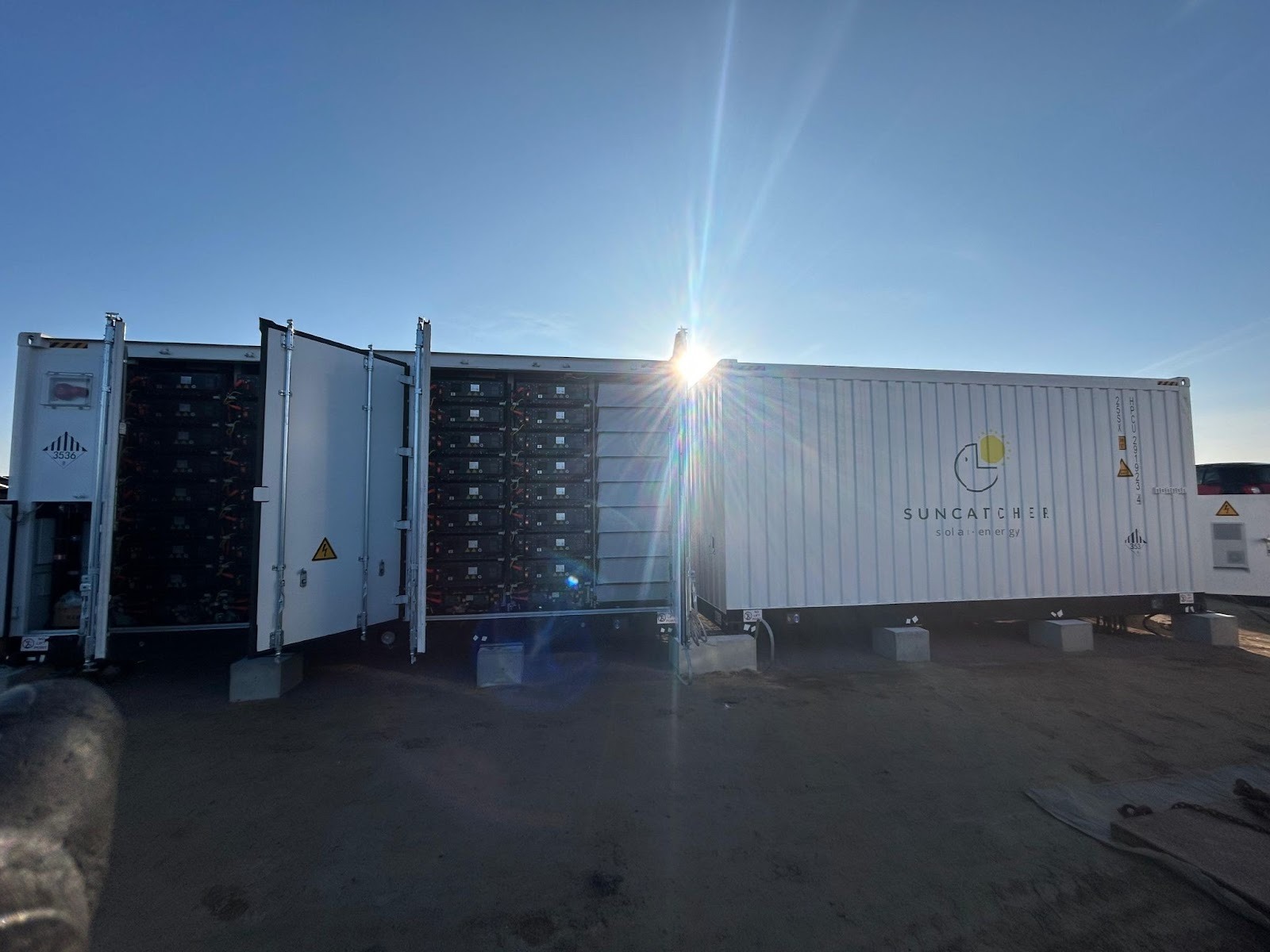
Today, SUNCATCHER Engineering uses Gridcog to model a wide range of projects, from relatively straightforward BESS stand-alone systems to complex PV + BESS assets with detailed offtake structures and subsidy schemes.
One recent milestone project from SUNCATCHER Engineering includes a 55 MWh of “green” battery capacity co-located with an already existing and operational solar plant in Germany, that faces the challenge of attaining financing due to the uncertainty of the business case without grid charging rights. Using the in-depth analyses from the Gridcog software, the project was brought under way, and is scheduled for installation around mid-2026.
In contrast, some projects push complexity much further. Lucas highlights a project that combined wind, PV, battery storage, and grid charging rights into a single system.
“Modelling the interaction between all those technologies is extremely complex,” he says. “Gridcog allowed us to handle that complexity properly and deliver robust results. Without a tool like this, it would have been very difficult, especially regarding the optimum sizing of the different technologies.”
.jpg)
Bankable Outputs for Financing and Negotiations
Gridcog output also contributes to supporting financing discussions with banks and investors.
“Our customers often take our Gridcog-based results and economic outputs directly to the banks,” Lucas explains. “If they need support, we join the discussions and use the results to explain assumptions, scenarios, and risks.”
A key advantage is scenario flexibility. Different banks often request different price curves or assumptions, and multiple sensitivities. Gridcog allows the team to cater for all of these requests and respond quickly.
“We can upload customers’ price curves and run alternative scenarios depending on what the bank wants to see,” says Lucas. “That level of detail and adaptability is extremely valuable.”
In Germany, even language can be a barrier. Some banks require documentation in German, and SUNCATCHER Engineering now produces Gridcog reports directly in German to meet these requirements, further strengthening credibility.
Daily Support and Real-World Problem Solving
SUNCATCHER Engineering makes extensive use of Gridcog’s project chat and industry support. In a single recent month, the team modelled seven utility-scale projects in Gridcog, and that number is expected to grow significantly. Here, Gridcog is delivering a major efficiency boost.
“We’ve become much faster,” Lucas notes. “At the same time, we’re constantly working with the Gridcog team to improve efficiency even further, especially as demand increases.” “Honestly, I use the chat function daily,” Lucas says. “Projects are often similar, but there are always small differences or new challenges.”
Fast response times have been critical. “Usually within ten minutes I have an answer. If it’s more complex, the team tells me they’re working on it internally. The speed and quality of support are excellent.”
This close collaboration helps the team continuously refine models, improve reports, and deliver results under tight timelines.
The SUNCATCHER team are particularly looking forward to the addition of a Berlin-based Gridcog office and industry team, to provide closer-to-home support on their European project modelling: “It will be great to have Gridcog team members within the same city, too, who can get really stuck into local regulatory changes and project complexities.”
Making Better Decisions on Battery Value and Sizing
“Thanks to Gridcog, we now have a very clear understanding of which PV plant sizes are cost-effective and under which conditions batteries actually add investor value,” Lucas explains.
That insight has also proven valuable when reviewing offtake offers such as tollings or floors. By running independent simulations, the team also enters negotiations with offtakers better informed and on stronger footing.
“We’re able to develop our own view and negotiate from a position of knowledge rather than relying solely on external assumptions.”
Why SUNCATCHER Engineering Chose Gridcog
For SUNCATCHER Engineering, selecting Gridcog was about balancing usability with technical depth.
“What really made the difference was the trade-off between a very good user experience and very high technical detail,” Lucas says.
“No matter how complex a project is, we’ve always found a way to model it in Gridcog.”
The platform allows the team to include regulatory constraints, subsidy schemes, PPAs, grid charging rights, and multiple market scenarios — all within a single, coherent framework.
“That combination is why Gridcog stood out compared to other alternatives,” Lucas adds.
Scaling Battery and PV Projects Across Germany and Poland
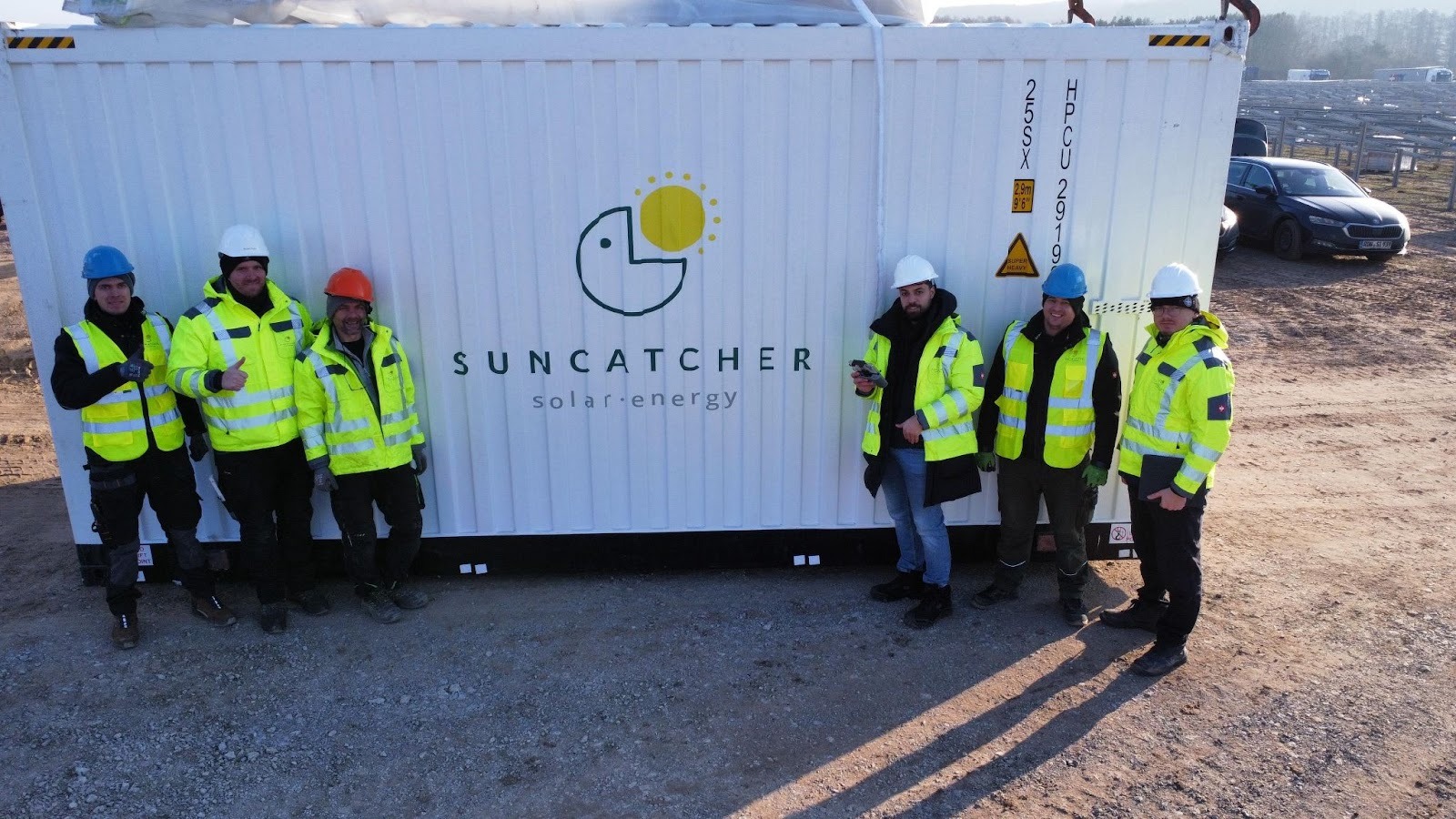
Looking ahead, the broader SUNCATCHER Group plans to start construction of around 500 MWp of PV in 2026 across Germany and Poland, all of them including battery storage. Furthermore, SUNCATCHER Engineering will construct 150-200MWh of BESS systems for its customers in 2026.
“Gridcog helps us choose the right sizes, understand the economics, and de-risk projects before construction,” Lucas says. “That’s essential as we scale and markets change.”
SUNCATCHER Engineering: https://www.suncatcher.de/en/
Lucas Dziadek (LinkedIn): https://www.linkedin.com/in/lucas-dziadek-1273ab118/

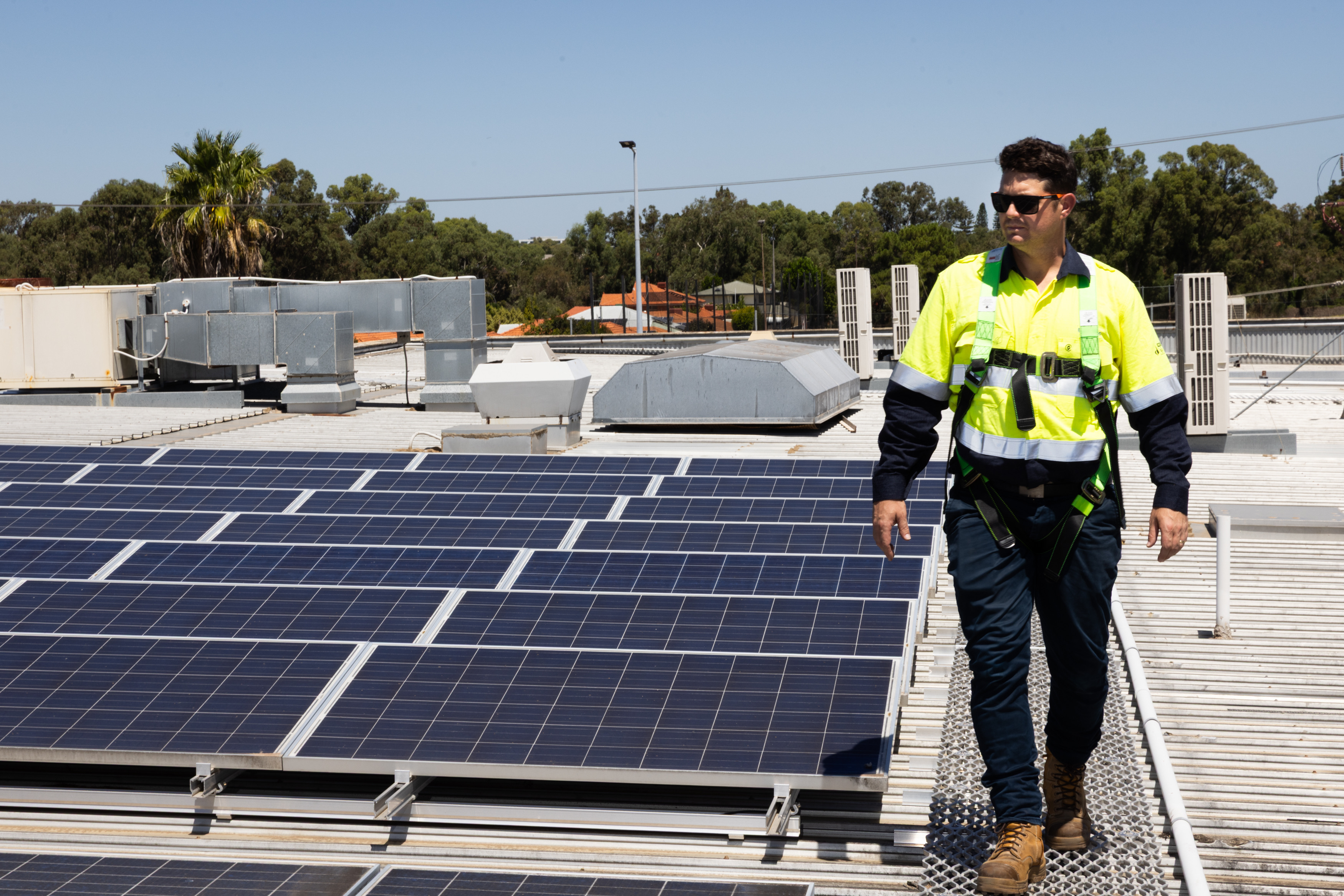
See how EnergyTec, WA's largest embedded network provider, uses Gridcog to model complex solar and BESS projects across major commercial and industrial property portfolios.
.jpg)
Europe-based meteocontrol accelerates Germany and Europe’s utility-scale renewable energy transition with bankable BESS revenue assessments.

Auckland-based Revolve Energy accelerates New Zealand’s community, commercial, and utility-scale renewable energy transition with data-driven, low-cost, low-carbon solutions.
%20Large.jpeg)
Learn how Prosolia Energy accelerates utility-scale PV and battery modelling with Gridcog, running thousands of simulations and de-risking investments.

Explore how Carb0n is helping UK real estate portfolios reduce energy costs, increase net operating income, and future-proof assets using Gridcog’s energy project modelling software.
Explore how Net Zero Advisory helps UK public sector projects cut emissions and reduce energy costs using Gridcog for smart microgrids, solar, and battery modelling.

Discover how NewVolt is building Australia’s first electric truck charging network with Gridcog’s energy modelling platform - solving complex infrastructure, scheduling, and commercial challenges to enable the electrification of heavy freight.
Discover how GoldenPeaks Capital is leading renewable energy investment in Europe through utility-scale solar and battery storage projects, with advanced BESS modelling powered by Gridcog.

Discover how Amboranj Power and AMPERES are empowering First Nations communities in Western Australia to take control of their energy futures through community-owned renewable projects, with the support of Gridcog’s advanced modelling.

Explore how Volta Energy Group is leveraging new technologies to deliver more efficient end-to-end renewable energy solutions, from advisory to operations.

See how Invinity Energy Systems uses Gridcog’s advanced modelling to optimise vanadium flow battery projects, driving renewable energy innovation and scalability worldwide.

Learn how Connected Energy uses Gridcog’s advanced modelling software to scale second-life EV battery storage systems, optimise revenue streams, and drive sustainable energy solutions in the UK and Europe.

Explore how Energy Pool and Gridcog are working together to accelerate grid flexibility in the Netherlands.

In 2023, Photon Energy Australia engaged Gridcog as a means to further optimise the profitability of their clean energy projects.

Shell EV Charging

Australian technology startup Gridcognition has announced a partnership with their first UK-based customer.

Indigo Power is a community-owned energy company located in Beechworth, a regional town 300 kms north-east of Melbourne.


