From Berlin to Birmingham: FCAs, Co-location and BTM Battery Economics

In mid-September, a big group of the Gridcog team headed over to Berlin for a busy week of events, including the Energy Storage Summit Germany, get Enspired and our first Gridcog Unplugged in Berlin.
One topic came up in almost every conversation we had - Flexible Connection Agreements (FCAs) - so in this blog we'll share some of our key takeaways on those, plus insights from presentations by our Senior Energy Analyst Daniel Lehmann, and our Europe Industry Lead, Laura Hoffmann-Ostenhof.
Gridcog Unplugged, Berlin:
We kicked things off with our first Gridcog Unplugged in Berlin on Monday the 14th of September. We only opened our Berlin office 9 months ago, so it was brilliant to have a full rooftop of Gridcog clients and friends join us - I'm really stoked with how quickly Gridcog has become part of the German energy ecosystem in such a short space of time. The location we picked for the event will be a hard one to beat as well, with our panellists speaking against a lovely sunset over the city!
As always we started with a panel discussion and this month's panellists were excellent - Anwar from MaxSolar, Jo from terralayr and Julian from MIRAI Power. The topic was how FCAs are reshaping the business case for hybrid utility-scale BESS projects in Germany, which is without doubt the topic of the moment in the German renewables and battery storage space.
For anyone less familiar with them, FCAs give projects quicker access to scarce grid capacity, but in return the asset has to accept limits on how it can import and export. These come in a few different forms.
- Static limits restrict import or export in fixed time windows.
- Renewable production-linked limits tie what the battery can do to the output of local wind and solar.
- Ramp rate limits restrict how quickly the asset can change its output.
- Wholesale freezes can stop the asset trading in the wholesale market during certain periods.
Many projects will face a combination of these and the terms vary from DSO to DSO, so developers and operators are working hard to understand exactly what they're signing up to, and what it means for optimisation and project revenues.
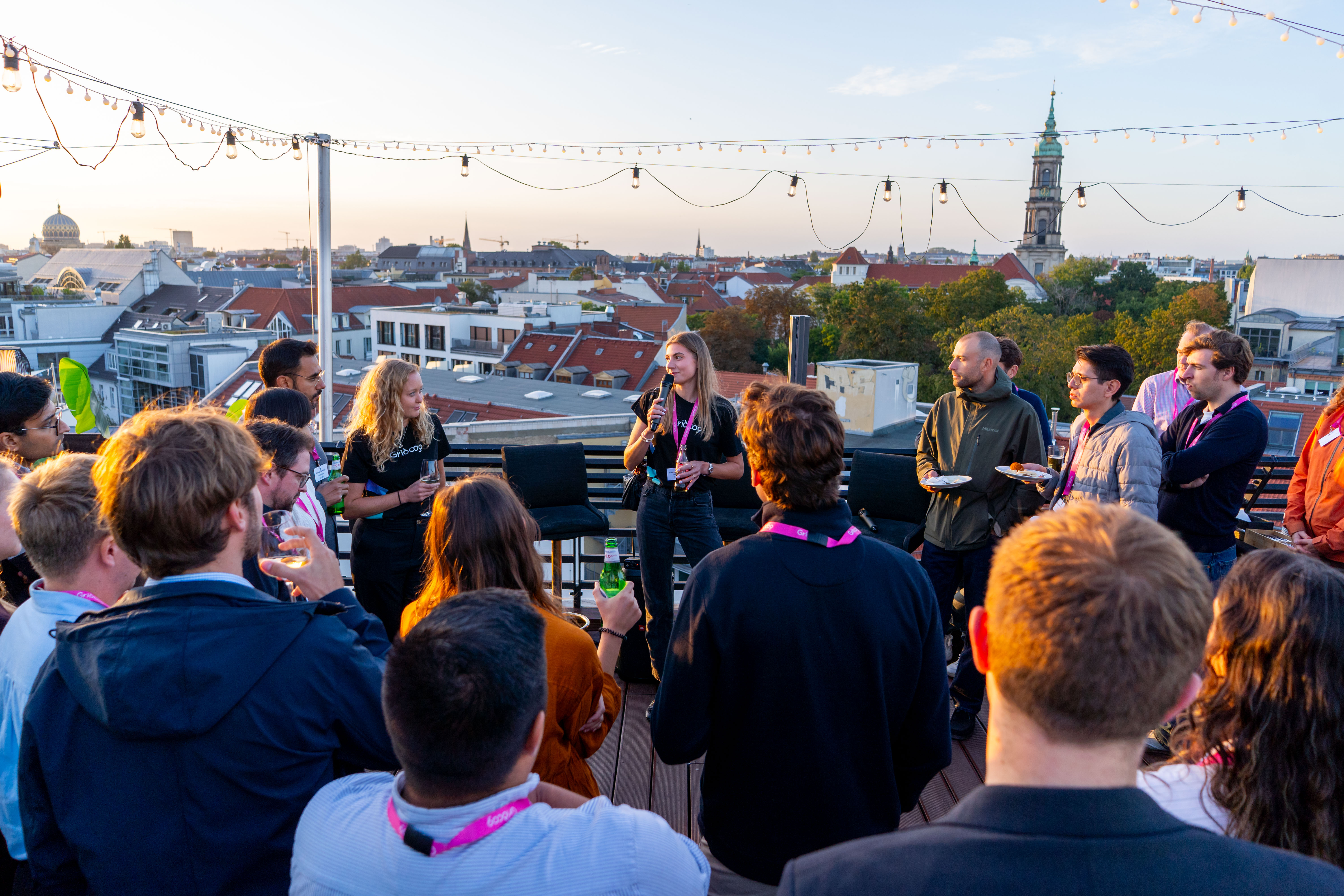
A few themes came through strongly in the discussion. FCAs are already changing how hybrid BESS projects in Germany are being designed and valued, and the detail of each agreement really matters, as two projects with similar-looking terms can end up in quite different places. The panel also agreed that the earlier developers get to grips with the actual terms they're being offered, the better placed they are to understand what a project is really worth and to have more informed conversations with network operators.
What stood out for me was how candidly our panellists shared their experiences of working through FCAs in practice. Everyone agreed the appetite for battery storage projects in Germany remains vast, but there's still work to do on transparency and on the regulatory side to accelerate flexibility and the energy transition more generally. There was a clear ask for more transparency from DSOs and TSOs in particular, which should help everyone learn and develop solutions (including FCAs) that have the intended effect.
Thanks again to Anwar, Jo and Julian, and to everyone who came along - the questions from the floor added a lot to the discussion and it was great to spend the evening with so many of you.
Energy Storage Summit Germany, Berlin:
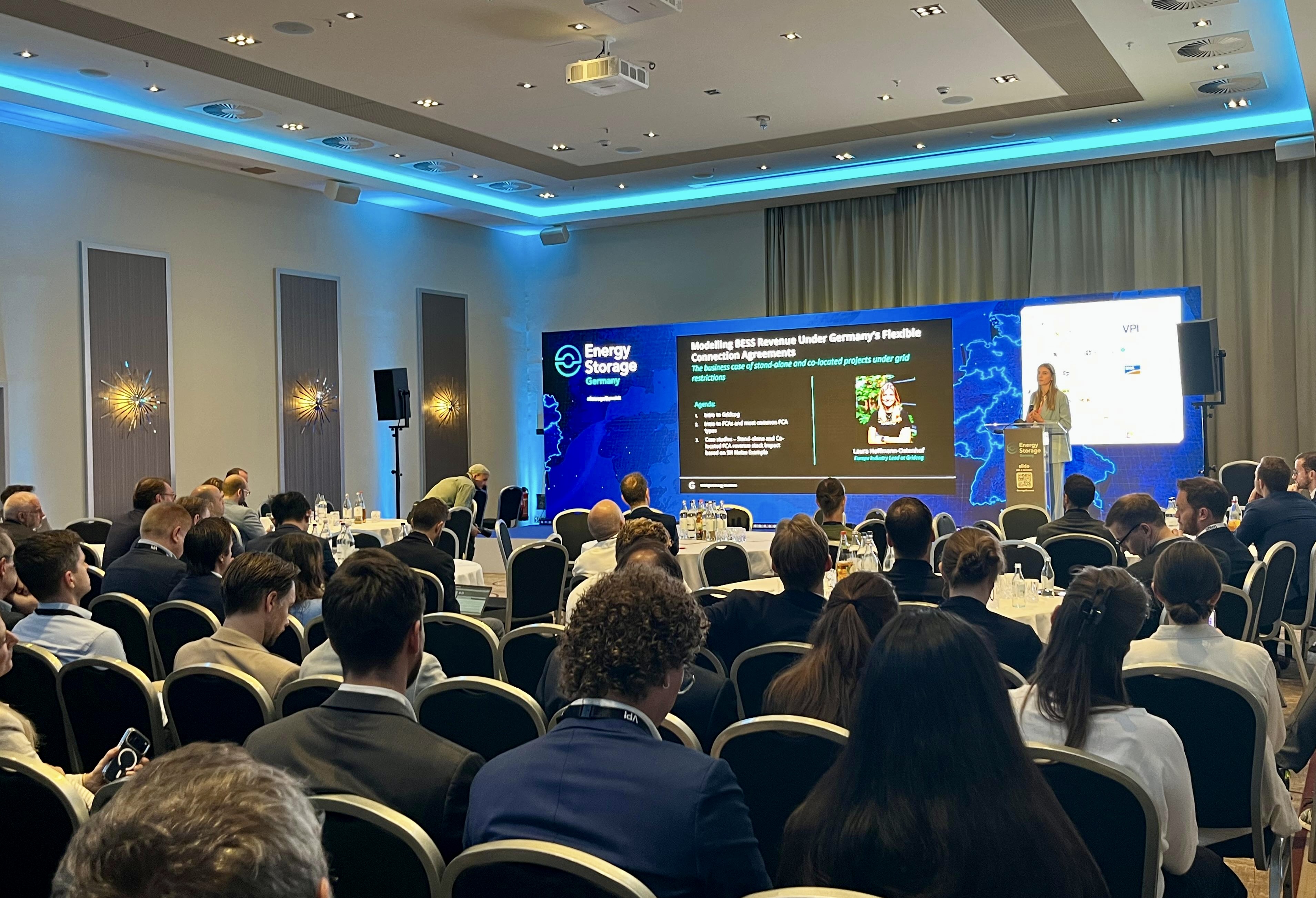
Two days later, Laura spoke at the Energy Storage Summit about modelling BESS revenue under Germany's FCAs.
She started by showing just how much the terms vary from DSO to DSO. Ramp rates, for example, range anywhere from 1% to 22% - renewable production-linked rules can be very specific. Some constrain export when local renewable output is above 50% and constrain import when it drops below 10%, with additional rules applying overnight.
Laura then used Gridcog to compare a stand-alone BESS with a co-located BESS plus solar project under an example FCA. One of the more interesting findings was that the revenue impact of stacking several FCA terms is often less than the sum of each term on its own, as different terms tend to bite at the same time. Co-location also helped reduce the impact, as the battery can soak up solar that would otherwise be constrained. Her conclusion was that the only bankable number is the actual asset modelled against its actual, stacked FCA, and that rules of thumb don't travel well between DSOs.
Co-location came up a lot across the week too. With price cannibalisation increasing across Europe, co-locating storage is one of the most obvious plays, and green battery storage is still a hot topic, with some developers going down that route before they've secured an import connection.
Get Laura’s full presentation slides here
Solar and Storage Live, Birmingham:
A week later Dan headed to Solar and Storage Live in Birmingham to give a presentation on how solar and storage can bring down costs for C&I customers in GB over the long term. He used a Gridcog backcast to look at what real assets could have earned over the last 12 months under different tariff and trading structures.
GB industrial electricity costs are still high, driven by volatile gas prices and a big non-commodity cost stack, but behind-the-meter batteries stack up well, either with solar or on their own, as long as they balance market revenue, bill savings and solar self-consumption.
Dan also talked about P415, which is central to making behind-the-meter economics work while letting C&I companies hedge their energy costs. Over the longer term though, wholesale trading will remain the foundation of the revenue stack.
Get Dan’s full presentation slides here
Meet Us at Our Next Event!
If you missed us in Berlin or Birmingham, we'll be at lots more events over the coming weeks. Come find us at:
Battery Asset Management Summit UK & Ireland in London (13–14th October)
BVES Investor Summit Europe in Berlin (14–15th October)
Renewable Energy Expo in Dublin (21-22 October)
XIII Foro Solar in Madrid (27–28th October)
inspiratia's Energy Storage Summit in Munich (29–30th October)
RE-Source in Amsterdam (4–5th November)
If you'd like to meet the team, or hear about our upcoming Gridcog Unplugged in London, send over an enquiry here.


.jpg)