

Navigating the German Battery Market: Lessons and Insights from Unplugged and E-world 2026
Navigating the German Battery Market in 2026: Financing, Grid Reform, and Co-location Strategies
Last week, our team headed to Düsseldorf’s Altstadt (Old Town) to host the first European edition of Gridcog Unplugged. We brought together a packed room of energy experts on the Monday night before E-world for a candid discussion on the future of the German energy market, with a specific focus on battery storage and co-location.
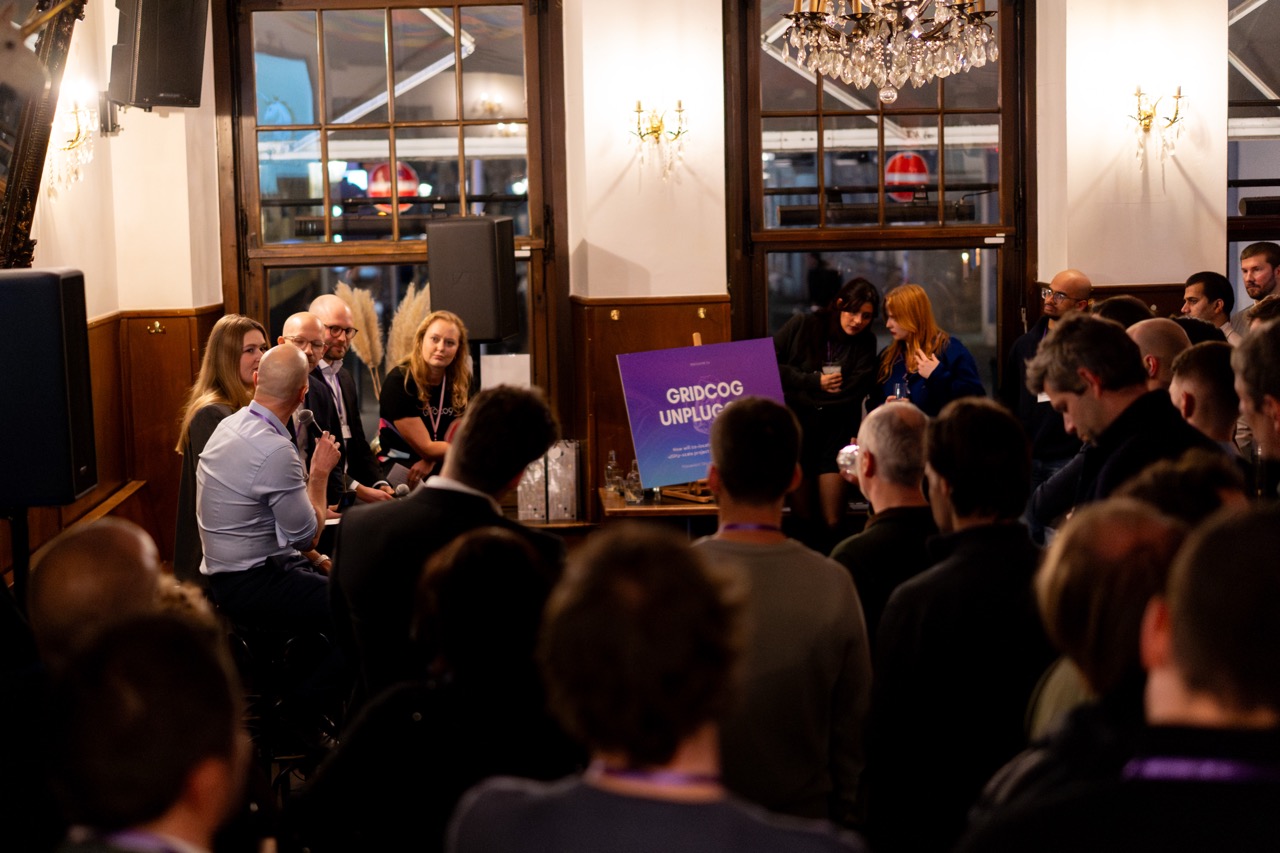
It was a fantastic evening of energy chats and networking. The tone in the room reflected how much the market has evolved over the past year. In 2025, the German BESS space was defined by a clear “bigger is better” mindset, driven by strong revenues, low saturation and very short payback periods.
This time, the conversation felt more measured. Increasing complexity, from scarce grid connection capacity to policy uncertainty around topics such as grid fee reform, has introduced a new layer of caution. Questions of bankability were also front and centre, with the panel exploring how lenders are assessing risk in a market that is moving beyond simple merchant versus contracted models. The enthusiasm for battery storage is still very much there, but it is now accompanied by a sharper focus on risk, optimisation, structuring and strategic positioning.
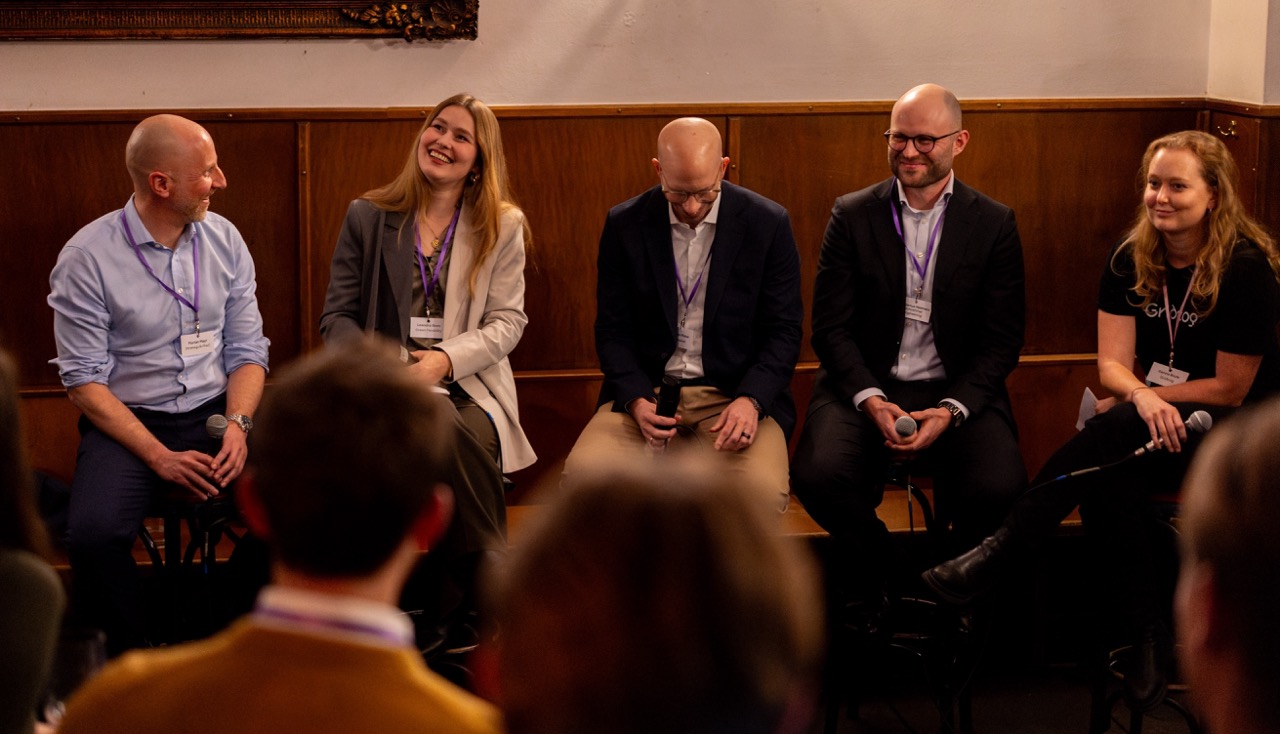
I had the pleasure of hosting a lively panel discussion featuring four industry leaders who offered diverse perspectives from across the ecosystem:
- Jürgen Pfalzer, Chief Growth Officer at enspired;
- Dr. Markus Heemann, Co-CEO at Suncatcher;
- Florian Mayr, Partner at Strategy& / PwC;
- Leandra Boes, Director Asset Management at green flexibility.
There was plenty of healthy debate and even a few controversial points, which is always a good sign of a market moving at pace. If you could not join us in Düsseldorf, here are our key takeaways from the night:
No one-size-fits-all financing
A major theme of the evening was the evolving landscape of how battery projects are being funded in Germany. Many projects have long been financed on a fully merchant basis, with owners and lenders comfortable relying on participation in energy, intraday, and balancing markets.
At the same time, it was clear from the panel that there is no single blueprint for financing BESS. While a large number of projects have secured funding on a merchant basis, some developers shared experiences of banks requiring up to 50 percent tolling to provide debt financing. Financing expectations vary depending on the lender, the asset structure, and the broader risk environment.
Commercial structures are therefore becoming increasingly complex, with hybrid arrangements, revenue floors, and tailored contracting strategies emerging to bridge the gap between merchant upside and lender requirements. These structures can be modelled and stress-tested in Gridcog, which is becoming essential as projects move beyond simple merchant versus contracted binaries.
Co-location is not a silver bullet
Grid connections are increasingly difficult to secure in Germany, with some developers receiving letters for connections as far out as 2038.
Against that backdrop, co-locating a battery with an existing renewable asset, and therefore an existing grid connection, can appear to be the obvious solution. On paper, it seems like a straightforward way to bypass connection bottlenecks and accelerate deployment.
In reality, the picture is more nuanced. Not all batteries can connect where they want, co-located assets hugely increase the technical complexity of a project, and the structure of the connection agreement matters.
Developers are exploring strategies that start with green batteries without charging rights, with a plan to secure import connections later in the process, after the asset has been deployed. The grid connection queue reform, which promises to move away from the “first come first served” principle and instead prioritise maturity, aims to ensure that deployed assets will be considered as most mature, and therefore prioritised.
For co-located green batteries that remain export-only, a significant challenge is the lack of charging opportunities during the winter months. To manage this, we are seeing sizing strategies where the battery is typically 25 to 50 percent of the renewable system’s capacity.
This more conservative sizing helps ensure the asset remains viable even when solar or wind yields drop, reducing the risk of the battery sitting idle during the darkest months of the year. These smaller sizes are also easier to get financed, and educating banks remains a crucial part of securing funding for a green BESS, as demonstrated by our recent case study with Suncatcher.
Alternative forward-looking approaches, including flexible connection agreements, are expected to become increasingly common by 2029 as developers adapt to grid constraints.
Co-location can unlock real value, but it requires careful design. As was noted during the discussion:
"It is not just a silver bullet. You need some really sophisticated optimisation to unlock super value."
Navigating regulatory uncertainty
Uncertainty in the regulatory landscape, however, reaches beyond grid connection. When you are investing in assets with a long lifecycle, you need a clear view of how regulation will evolve, and this uncertainty acts as a "poison" for long-term capital allocation.
One of the most watched developments is the ongoing overhaul of Germany’s grid fee regime. Under current law, battery energy storage systems benefit from exemptions that shield them from network charges, but those exemptions are under review as part of the Federal Network Agency’s reform process. Industry stakeholders have warned that plans to introduce more grid‑related costs for BESS in addition to the Baukostenzuschuss, a CapEx construction fee that was introduced in 2025, would materially affect project economics and planning security.
The sentiment was clear: for a healthy transition, market signals must remain the priority:
"The signal from the market should be stronger than the signal from the grid; otherwise, we don't have a market."
Looking ahead to new revenue streams
The discussion wrapped up with a look at the future of BESS optimisation. Beyond simple arbitrage, new opportunities such as dynamic grid fees, as well as emerging blackstart and inertia markets, are coming into focus as ways to strengthen and diversify the revenue stack.
At the same time, the conversation turned to Germany’s power plant strategy, the Kraftwerkstrategie, and the evolving design of the proposed capacity market. The panellists noted that current draft designs are not fully technology agnostic and, in practice, continue to favour gas-fired generation.
While there is broad recognition of the need to increase system flexibility and accelerate the energy transition, the regulatory details will matter enormously. The final shape of the capacity mechanism will play a decisive role in determining how large a share of that future value pool BESS can realistically capture.
A big year for project development
For us at Gridcog, this event was a big moment. We recently opened our office in Berlin and have a growing team on the ground, so it was fantastic to see such a strong turnout for our first German event.
There is still plenty of work to do to navigate the grid constraints and regulatory hurdles, but the energy and openness in the room suggest the German market is ready for the challenge. We’ll have a lot more Germany-focused content coming in the next few months. Watch our latest video from Laura on the key trends to look out for in 2026:
Thanks again to our excellent panellists and everyone who joined us. We are already looking forward to the next one. Subscribe to our events calendar so you don’t miss our next Germany-based Unplugged events.


.jpg)

