

Battery and connection
Set the battery's power, capacity, round-trip efficiency, cycle limits and degradation, and the connection's import and export limits.
A community battery, sometimes called a neighbourhood battery, is a front-of-meter battery connected to the local distribution network and operated to share value with local energy users. Instead of one household or business owning the storage, many local customers share it, alongside the network and the markets the battery trades in.
| Home battery | Community battery | Utility-scale battery | |
|---|---|---|---|
| Typical size | 5 kWh to 15 kWh of storage | 50 kW to 5 MW of power in Australia's federal programme | Large standalone assets, or co-located with solar or wind farms |
| Where it connects | Behind the household meter | Front of meter, on the local distribution network | Often the very-high-voltage transmission network |
| Main value | Using more of the household's rooftop solar | Shared between local customers, the network and energy markets | Market revenue, such as capacity, wholesale arbitrage and ancillary services |
Every stakeholder can: networks, suppliers and retailers, customers and community asset owners. Community batteries come with many ownership, technical, deployment and commercial options, and Gridcog quantifies the full value stack for every option, so you can show the real benefits of shared community storage for everyone.
Through new retail products. Energy suppliers and asset owners can work together on retail electricity supply products that share the battery's value with local communities and electricity consumers, such as storage-as-a-service subscriptions, discounted time-of-use rates or different feed-in tariff arrangements. Gridcog models each of these retail options, including the impact of network use of system (NUoS) charges and the revenue the battery can earn from market services, which can enable cheaper and greener retail products.
Energy retail software for testing new tariffs and propositions
Usually most of it. Most of the value to share back with local communities will come from revenue in wholesale energy markets: energy arbitrage, ancillary services and reserve capacity. Forecasting that value for an investment decision needs:
Gridcog covers all of these.
It can defer network costs. Gridcog models the avoided short-term and long-term marginal network costs that come from community batteries, showing the impact on feeder-level coincident maximum demand and reverse flows. Networks can also use Gridcog to test different network pricing options or network support contracts, for example through local flexibility markets, that encourage asset owners to put batteries where they add the most value to the local network.
Planning a community or neighbourhood battery?
Model its value for every stakeholderAs one front-of-meter battery on the distribution network, with its market access, network tariff and every party's share of the value set out in one project.
Set the battery's power, capacity, round-trip efficiency, cycle limits and degradation, and the connection's import and export limits.
Assign the wholesale, ancillary service and capacity markets the battery can trade in, using the local market rules and prices.
Apply the network tariff the battery pays, including trial or bespoke storage tariffs, with separate import and export components where the network sets them.
Model the retail products that share the battery's value with local customers, from storage-as-a-service to discounted time-of-use and feed-in rates, as tariffs and value flows between the participants.
Add the network, the supplier or retailer, the asset owner and local customers as participants, then assign each income and cost to the right party, including percentage splits.
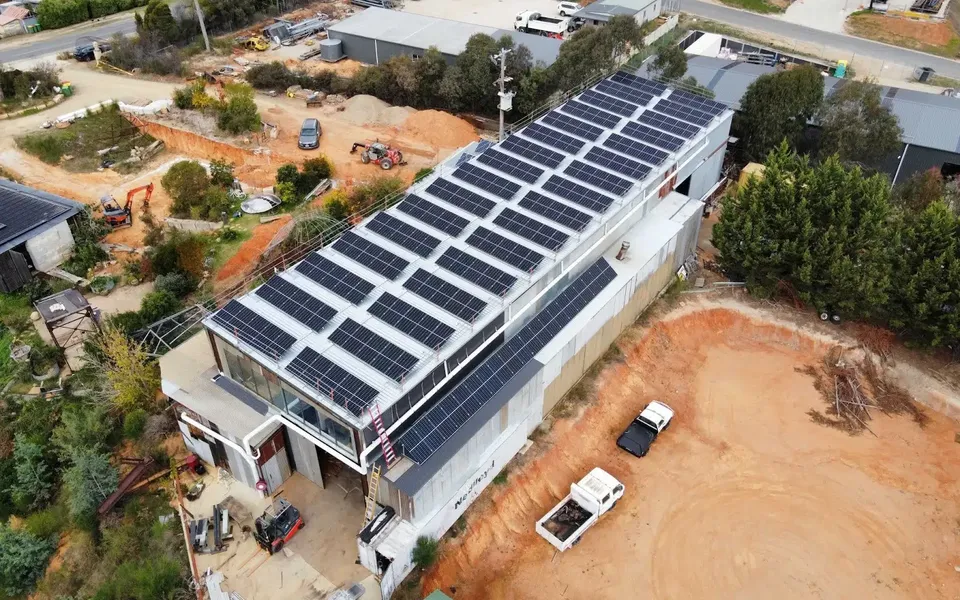
Developing Community Energy Hubs that combine local renewable generation, storage, energy sharing and retail supply. Indigo Power used Gridcog to assess the community battery tariffs being trialled by some networks and to compare outcomes in the NSW and Victorian wholesale markets. For the Yack01 battery in Yackandandah, it needed a PPA that shared the benefits and risks between the host site, the battery owner and the community.
‘Community energy projects are often multi-party, so it was great to use a software that provided a clear workflow which transparently showed the trade-offs.’
Request a live demo
Request a demo and we'll show you how Gridcog models the value of a community battery for the network, the supplier, the asset owner and local customers.
The team behind Gridcog

Fabian Le Gay Brereton
Chief Executive Officer & Co-Founder
Previously co-founded Greensense, acquired by ERM Power (now Shell Energy).

Pete Tickler
Chief Product Officer & Co-Founder
Co-founded Greensense and led digital innovation at ERM Power (now Shell Energy).

Genna Boyle
Chief Commercial Officer & Head of EMEA
More than 10 years in energy strategy, trading and renewables, with senior roles at Battery Optimiser and Limejump.

