Industries

Renewable energy modelling software for every part of the energy transition

Gridcog is renewable energy modelling software for the teams that build, fund, advise on and use clean energy projects. It simulates the physical and commercial performance of solar, battery storage, hybrid, behind-the-meter and e-mobility projects, interval by interval. Each team sees the full range of a project's returns before anyone commits capital.

  • 18,000+projects modelled

    Gridcog has modelled more than 18,000 energy projects across 40+ markets.

  • 10xfaster than in-house tools

    Prosolia Energy ran over a thousand simulations across more than 200 projects in a few months, at least 10 times faster than with its in-house tools.

  • £27minvestment secured

    Sustain Commercial Solar, which models its behind-the-meter revenue stack in Gridcog, estimates around £27m of investment secured over the past 12 months (case study, October 2026).

  • 5cities

    Gridcog has teams in London, Berlin, Madrid, Perth and Melbourne, and is backed by ABB, DNV, Axpo and VERBUND.

Who uses renewable energy modelling software?

The industries below each face a different decision, but the model underneath is the same: assets, grid connections, market rules and contracts simulated together, with every assumption visible.

Project developers and IPPs

Utility-scale developers and independent power producers (IPPs) use Gridcog to design solar, wind, battery and hybrid projects before final investment decision (FID). Test hundreds of configurations against the grid connection, market rules and offtake contracts, then compare scenarios by cashflow and internal rate of return (IRR).

Proof

SUNCATCHER Engineering uses Gridcog to size batteries and de-risk co-located solar projects in Germany and Poland before construction.
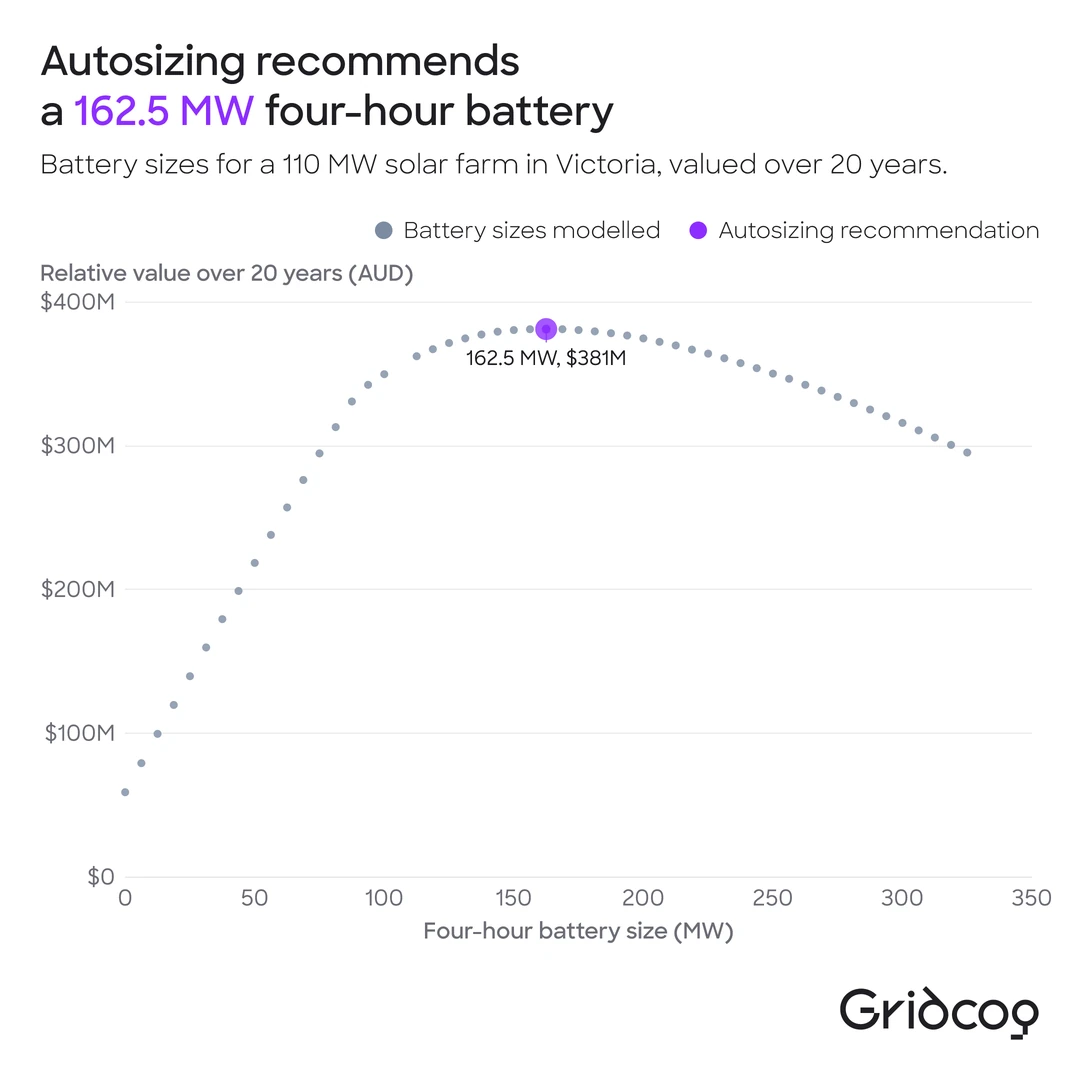
Gridcog autosizing curve recommending a 162.5 MW four-hour battery for a 110 MW solar farm over 20 years
Autosizing a four-hour battery for a 110 MW solar farm

Energy majors

Utilities, energy majors and suppliers use Gridcog to give their analysis teams one modelling standard in every market they work in. Teams in project development, energy solutions and supply model battery fleets, electric vehicle (EV) charging and virtual power plants with full cashflows for each stakeholder. They can use Gridcog's market data or bring their own price curves.

Proof

Shell's team in the Netherlands used Gridcog to plan fast charging at its forecourts and to explore vehicle-to-grid for fleets.
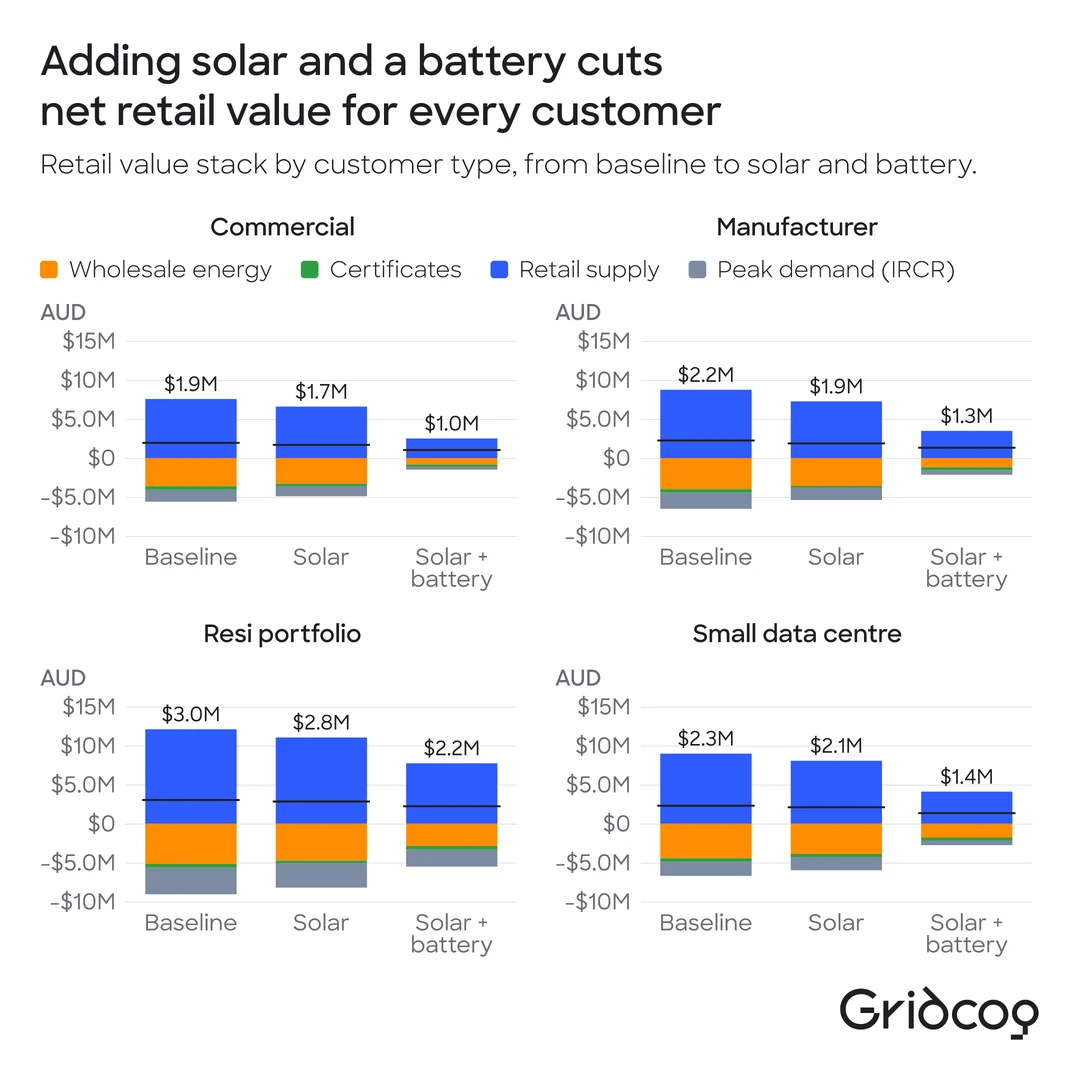
Retail value stack for four customer types under baseline, solar, and solar with battery scenarios, modelled in Gridcog
Retail value stack across customer types and scenarios

Large energy users

Industrial and commercial businesses use Gridcog to test on-site solar, battery storage and fleet electrification in-house, before they invest. Model supply tariffs, network charges and constrained grid connections across a portfolio of sites, and compare the cost of a grid upgrade with the cost of solar and storage.

Proof

We modelled Wembley Stadium in Gridcog. Solar alone could not reduce its evening peaks; adding a battery cut grid imports at those peaks.
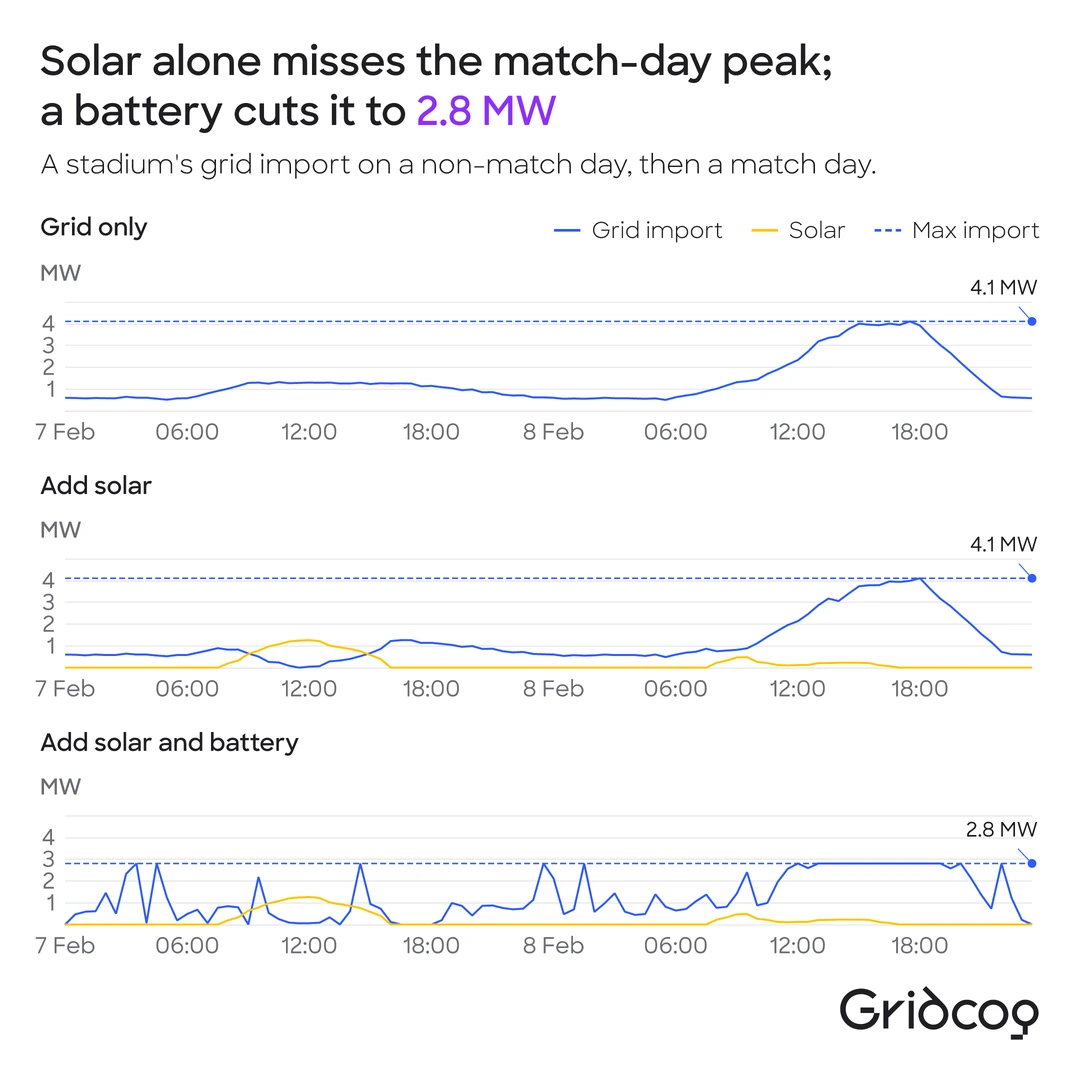
Stadium grid imports on a non-match and a match day: grid only, with solar, and with solar and battery, in Gridcog
Solar alone misses the evening peak; solar with a battery reduces it

E-mobility

Fleet operators and charge point operators use Gridcog to size chargers, batteries and grid connections against real vehicle schedules. Compare smart, bi-directional and impatient charging, add solar or storage, and test whether a depot or public charging hub pays back before you build it.

Proof

NewVolt used Gridcog to check that charging capacity, battery storage and grid connections were right-sized for its Melbourne truck charging hubs.
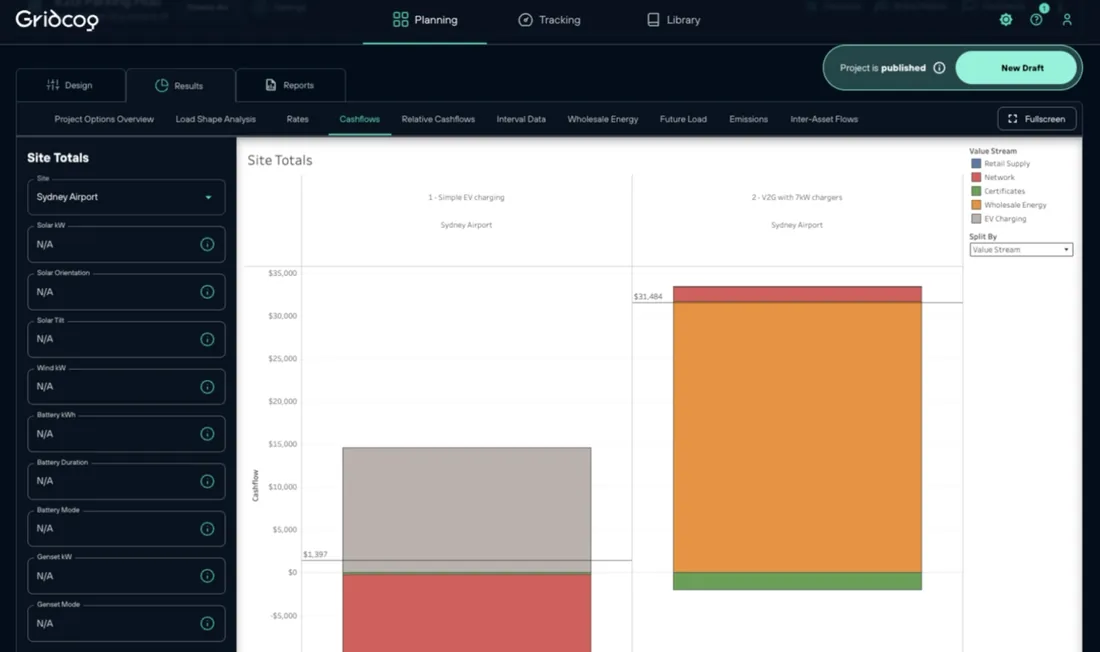
Gridcog cashflow comparison for simple EV charging and vehicle-to-grid with 7 kW chargers at a long-stay car park
Simple charging versus vehicle-to-grid at a long-stay car park

Consultants and advisors

Energy consultancies and engineering firms use Gridcog for feasibility studies, revenue assessments and decarbonisation plans their clients can audit. Build a model once, share the outputs and assumptions, and reuse it across sites and markets instead of rebuilding a spreadsheet for every engagement.

Proof

Revolve Energy stacked battery revenues in Gridcog to shrink the grid connection needed at Mangawhai Hills in New Zealand, lowering upfront capital and network costs.
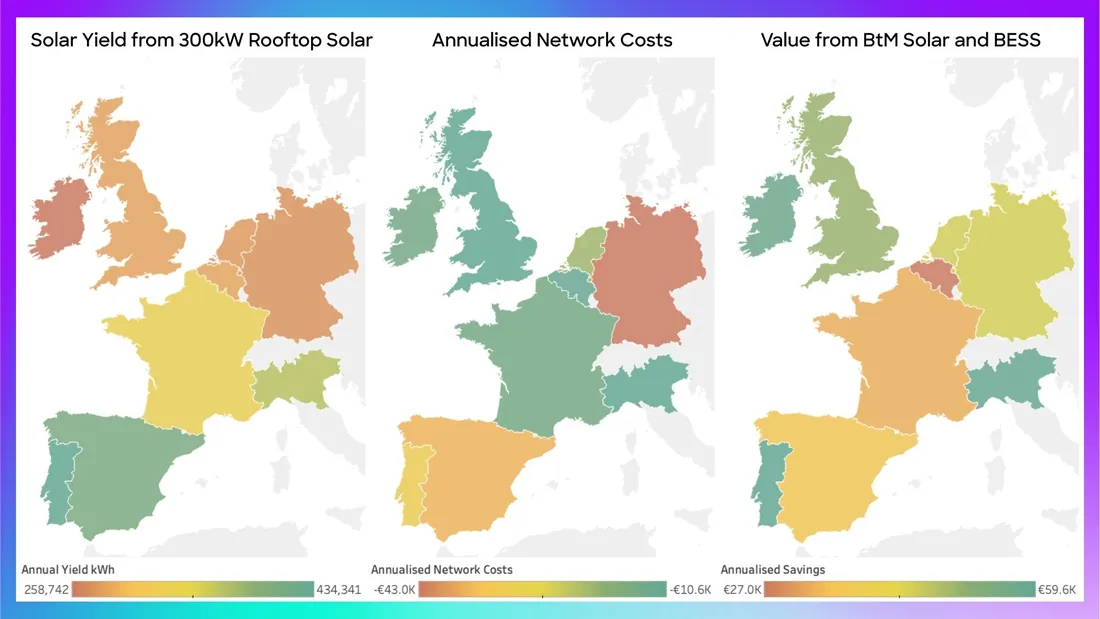
Maps of solar yield, network costs and value from behind-the-meter solar and battery projects across Europe
One project, rerun across European markets

Property and real estate

Property owners, developers and their advisors use Gridcog to plan solar, battery storage and EV charging across a portfolio. Model landlords and tenants as separate participants, test embedded networks and microgrids, and show owners and lenders what an energy project adds to an asset's income.

Proof

Carb0n used Gridcog to build the case for 3.5 MW of solar car ports and a 4 MWh battery, controlled centrally on behalf of the landlord.
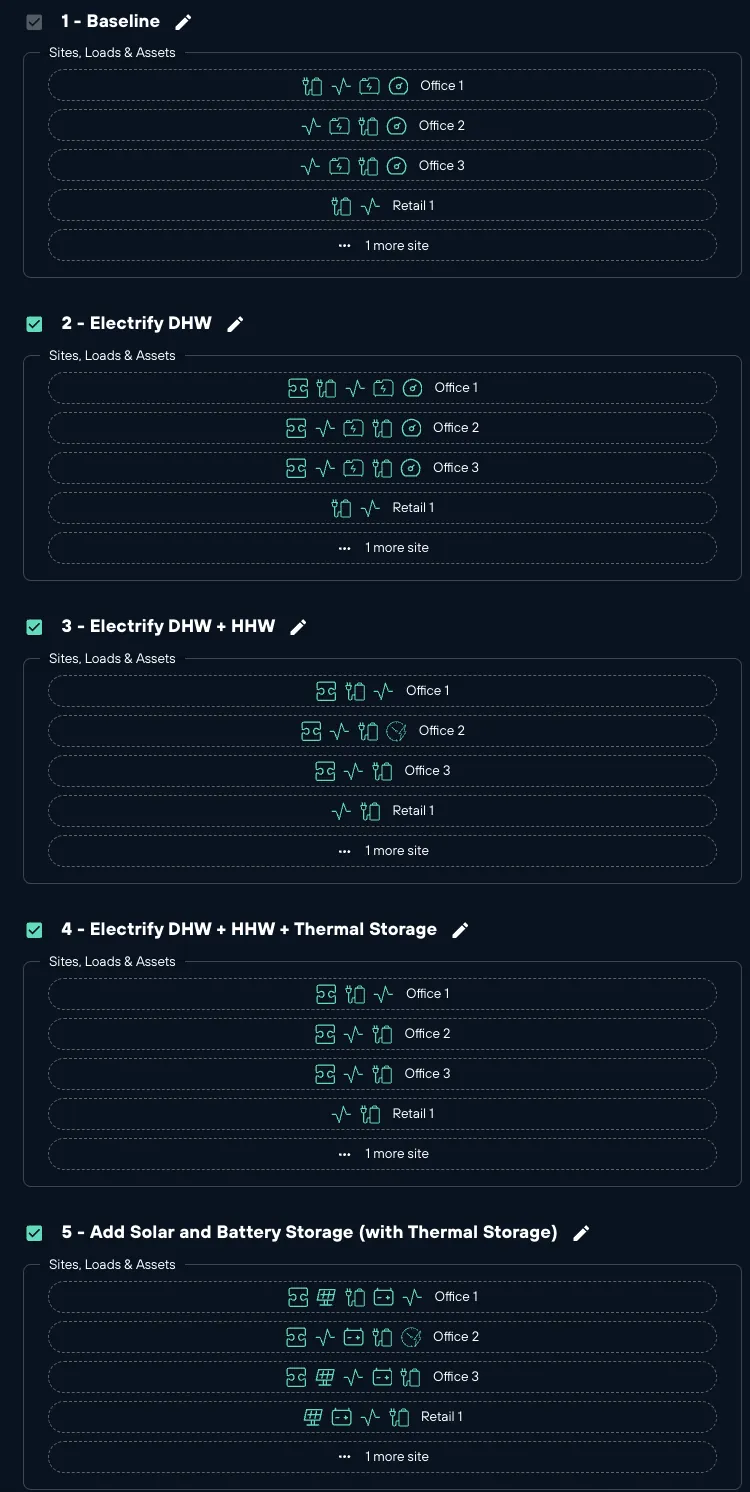
Gridcog scenarios for an office and retail portfolio, from baseline to electrified hot water, thermal storage, solar and battery
Portfolio scenarios for offices and a retail site in Gridcog

Distribution networks

Distribution network operators (DNOs) and distribution system operators (DSOs) can trial new tariffs, flexibility services and dynamic connection limits in Gridcog before they roll them out. Customer-owned solar, batteries, EVs and heat pumps are modelled as price-responsive assets, and the same model values community batteries for customers, markets and the network.
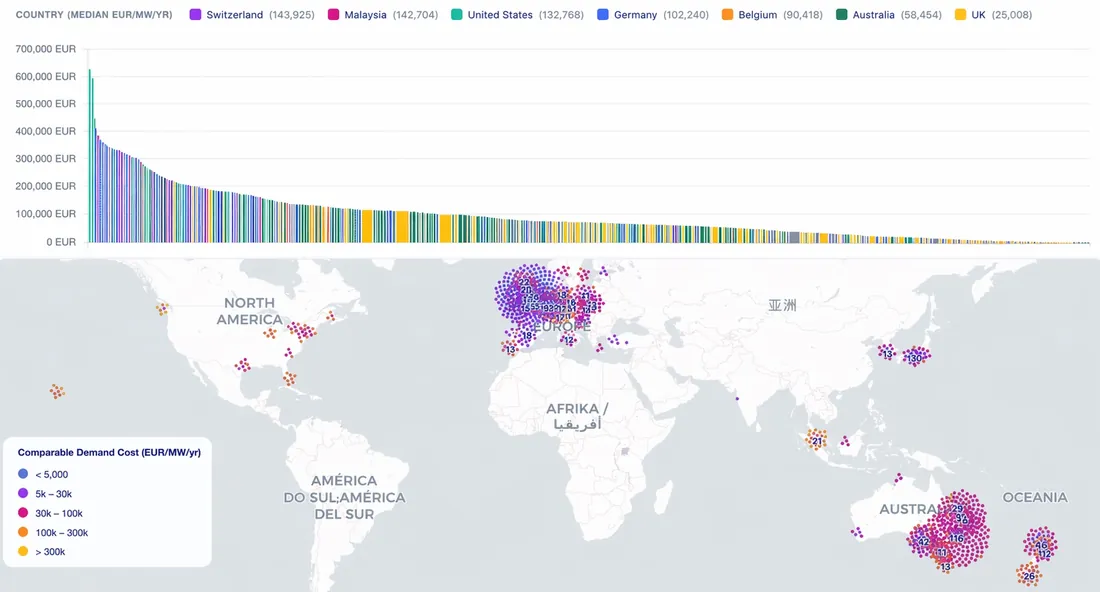
Map and chart comparing network tariffs with demand charges from the Gridcog Library
Network tariffs with demand charges in the Gridcog Library
01 / 07

Which decisions does Gridcog help you make?

Most projects reach Gridcog at one of six decision points, from sizing a battery energy storage system (BESS) to final investment approval. The table shows the question each one raises, who usually asks it and how Gridcog answers it.

Show decisions for
Showing all 6 decisions
Decision point The question Who asks it How Gridcog models it Read more
01Solar + BESS sizing
How big should the battery be, in MW and hours?
Developers,IPPs,Consultants
Autosize battery power and duration against the site's connection and prices, then compare IRR by scenario How big is a battery?
02Dynamic grid connections
Can we connect sooner on a flexible connection, and what will curtailment cost?
Data centres,Large energy users,Developers
Apply a Site Import Schedule for timed or phased limits, or upload interval data for real-time curtailment, then size storage or generation to cover the gap Flexible grid connections for data centres
03Merchant exposure and negative pricing
What happens to revenue when prices go negative or spreads narrow?
Developers,Investors,Energy majors
Dispatch on a forecast and settle on actual prices across wholesale, ancillary, balancing and capacity markets Negative pricing and price volatility
04Battery retrofits
Is it worth adding a battery to a solar farm that is already running?
Asset owners,IPPs,Funds
Model the existing plant with its subsidy or power purchase agreement (PPA), add storage on the shared connection and compare against solar alone Retrofitting a BESS to the Wemen Solar Farm
05Entering a new market
How do returns compare in a market we have not built in yet?
Developers,Investors,Consultants
Rerun the same project with that market's rules, tariffs and prices from the Gridcog Library Ireland's co-location opportunity
06Investment approval or FID
Will the revenue case hold up at investment committee and with lenders?
Investors,Developers,Energy majors
Compare cashflows, IRR and net present value (NPV) across scenarios, and summarise revenue, financials and key assumptions in the Investment Case Report Bankability and the funding pathway for BESS

Not sure where your project fits? Gridcog's Industry team of energy experts works with customers directly.

Get in touch

What can you model in Gridcog?

Gridcog models solar PV, wind, battery energy storage systems, fuel-powered generators, EV charging, flexible loads and green hydrogen electrolysers, on their own or sharing a grid connection. Each asset has its own technical settings, from degradation and cycling limits to heat rate curves and charger limits.

Solar PV
Wind
Battery storage
Generators
EV charging
Flexible loads
Green hydrogen
Grid connection

2 assets sharing one grid connection

Which markets does Gridcog model?

Gridcog models 40+ electricity markets, including Great Britain, Ireland, Germany, Spain, Australia and New Zealand. Market rules, settlement logic, network tariffs and price data sit in the Gridcog Library, so a project built for one market can be rerun in another.

What have customers achieved with Gridcog?

Each of these customers has published a case study on how they use Gridcog and what changed.

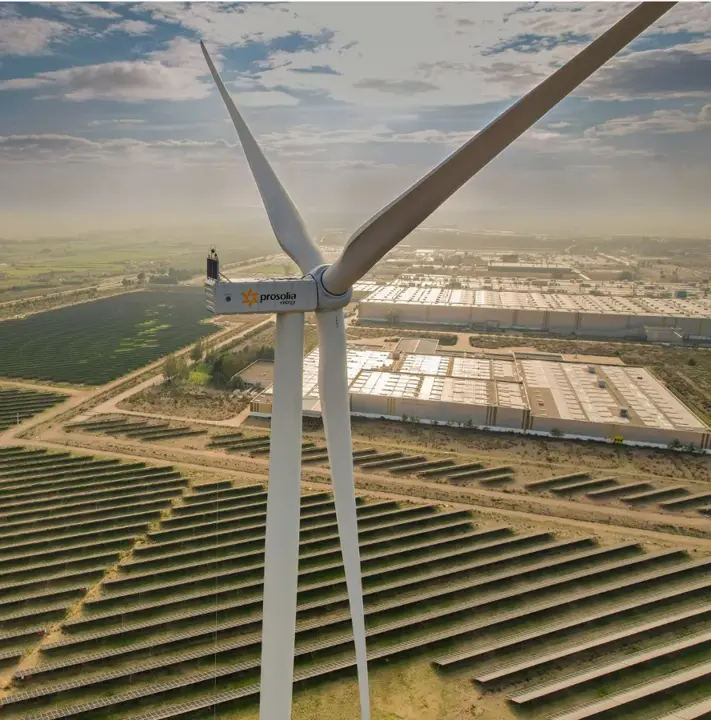
Prosolia Energy wind turbine above a utility-scale solar farm
Independent power producer, Europe

Prosolia Energy

Models utility-scale solar and battery projects in Gridcog and has applied it to more than 200 of them.

It's at least ten times faster than using in-house tools.
Marc Kleindienst, Energy Solutions Engineer, Prosolia Energy
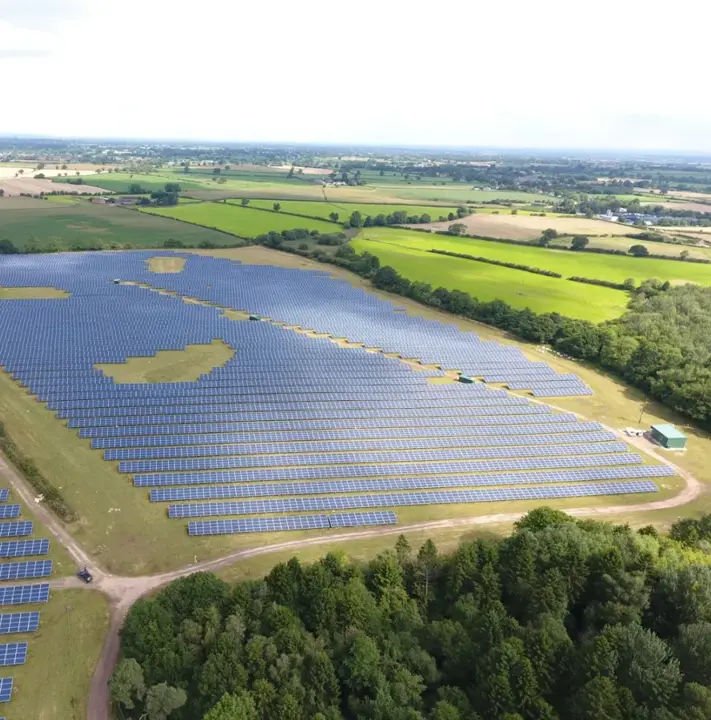
Aerial view of a solar farm in the UK countryside
Behind-the-meter developer, UK

Sustain Commercial Solar

Models solar, battery storage, wholesale trading and capacity market income for commercial clients, and estimates around £27m of investment secured over 12 months.
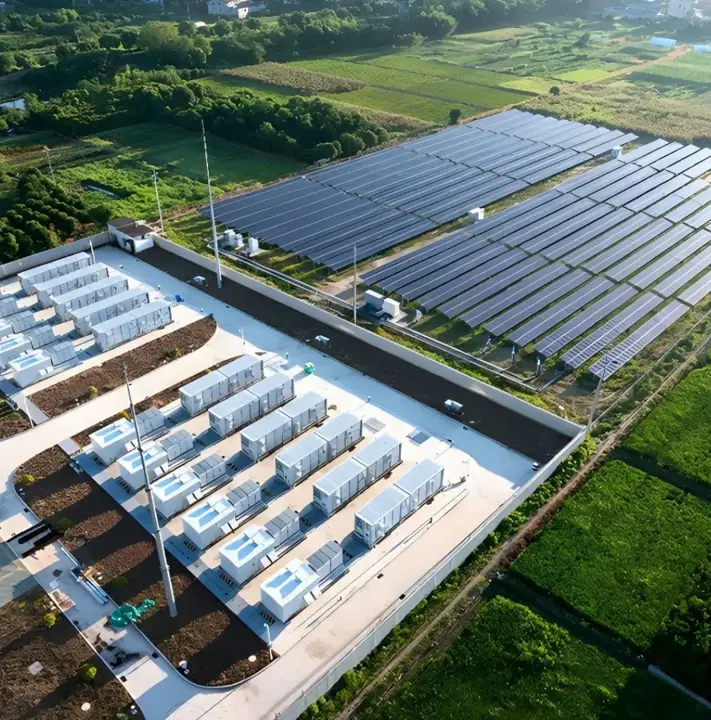
Battery storage containers beside a large solar farm
Technical consultancy, Germany

meteocontrol

Uses Gridcog for bankable BESS revenue assessments, including a 53 MWp solar and 120 MWh battery project in Saxony-Anhalt.
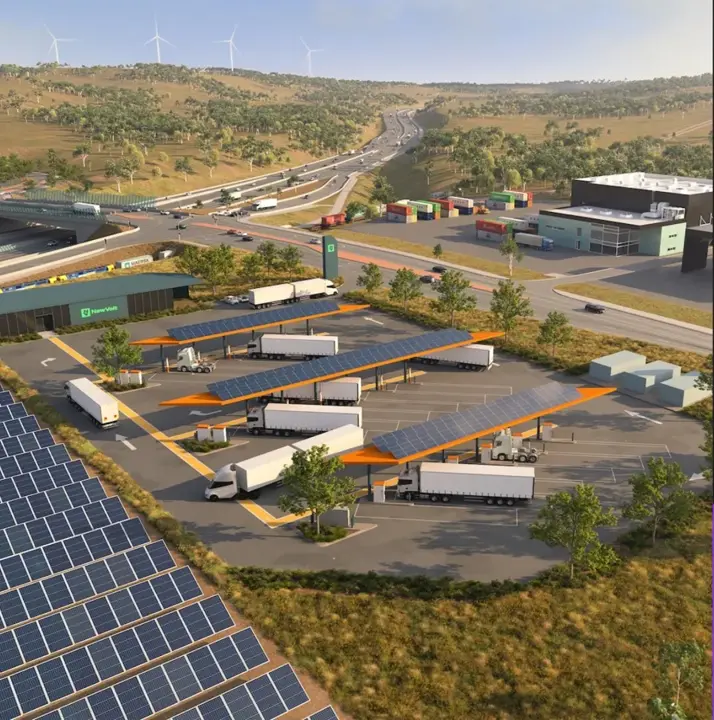
Rendering of an electric truck charging hub beside a motorway
E-mobility, Australia

NewVolt

Sized charging, battery storage and grid connections for the Melbourne Electrified Freight Network's three 2–4 MW truck charging hubs.

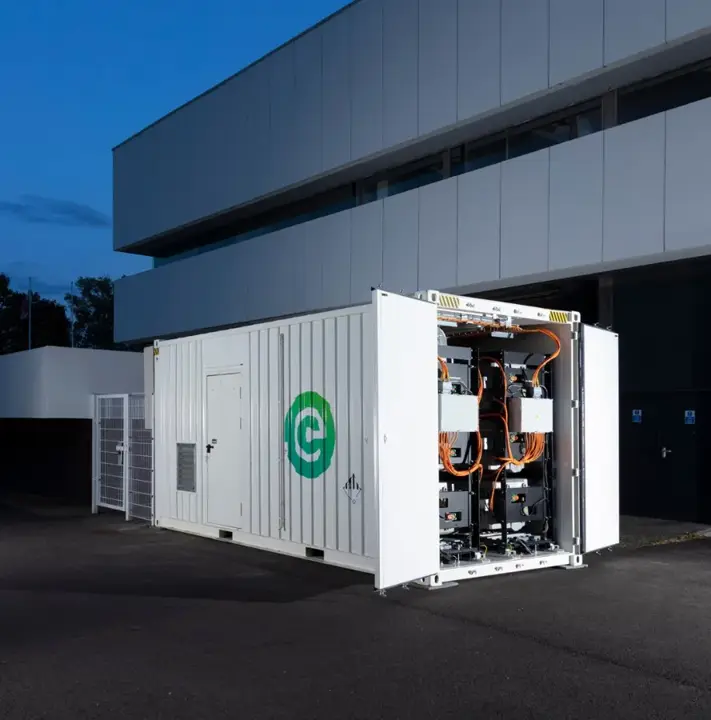
Connected Energy second-life battery storage unit outside a building
Second-life battery storage, UK and Europe

Connected Energy

Uses Gridcog to analyse revenue and savings for its battery systems, including the effect of local site load.

Frequently asked questions

Renewable energy modelling software simulates how an energy project will perform before it is built: what each asset produces or stores, how it dispatches against prices and grid limits, and what it earns or saves. Gridcog does this interval by interval for solar, wind, batteries, EV charging and flexible loads, then turns the results into cashflows and returns for each stakeholder.

It depends on how complex the project is. A single-technology tool can size a standalone solar farm. Once a project combines several assets, contracts or markets, such as a battery added to a solar farm with a PPA and a constrained connection, you need software that models them together. That is where Gridcog is strongest. See how Gridcog compares with spreadsheets, in-house tools and consultant-led modelling.

Gridcog optimises the full revenue stack in a single solve, dispatches on a forecast and settles cashflows on actual prices, and models each party and contract separately in one project. Spreadsheets struggle once a project adds a battery, an offtake contract and a constrained connection. In Gridcog every input and assumption stays visible, so the team can explain any result at investment committee.

Gridcog models 40+ electricity markets, including Great Britain, Ireland, Germany, Spain, Poland, Italy, Portugal, the Netherlands, Belgium, France, Australia's National Electricity Market (NEM) and Wholesale Electricity Market (WEM), and New Zealand. Historical price data updates daily, and network tariffs are updated as network operators change them. See the markets Gridcog models.

Yes. Consultancies and engineering firms use Gridcog for feasibility studies, revenue assessments and decarbonisation plans. They can share outputs and assumptions with clients, work down to 5-minute resolution and add client data to the Gridcog Library to reuse it. Both meteocontrol and Net Zero Advisory deliver client projects in Gridcog.

Gridcog makes every step from assumption to IRR visible. Teams compare scenarios on cashflows, IRR and NPV, and the Investment Case Report puts revenue, financials and key assumptions in one place. For a 10 MWp solar and 10 MWh battery project, meteocontrol used a Gridcog revenue assessment as a key input to the capital value and mortgage value assessment for project financing.

Yes. Gridcog models existing and planned connections, dynamic connection limits, active network management and dynamic operating envelopes. A Site Import Schedule applies a timed or phased import limit, and autosizing then sizes battery storage or generation against it. Large energy users can also compare the cost of a grid upgrade with investing in solar and batteries. See how this works for flexible grid connections for data centres.

Gridcog benchmarks its simulations against real assets and publishes the results in client documentation. Production profiles are validated against industry models and real-world asset data. Historical prices update daily and network tariffs follow each operator's changes. Every assumption in a model can be inspected and changed.